
Autonomous Driving
Enabling Safe and Reliable Autonomous Mobility Through High-Quality Data Annotation
We empower mobility companies to build and deploy advanced computer vision and AI models with confidence by delivering high-quality, precise data annotation services. Our accurate labeling supports the development of robust autonomous vehicle systems, enhancing object detection, tracking, and decision-making capabilities in complex real-world environments. By ensuring reliable and consistent annotations, we help reduce model errors, accelerate training cycles, and improve overall system safety. Our services are tailored to meet the demanding needs of the mobility sector, enabling smarter, safer, and more efficient autonomous transportation. With Vertix Robotics, your AI models are powered by data you can trust.

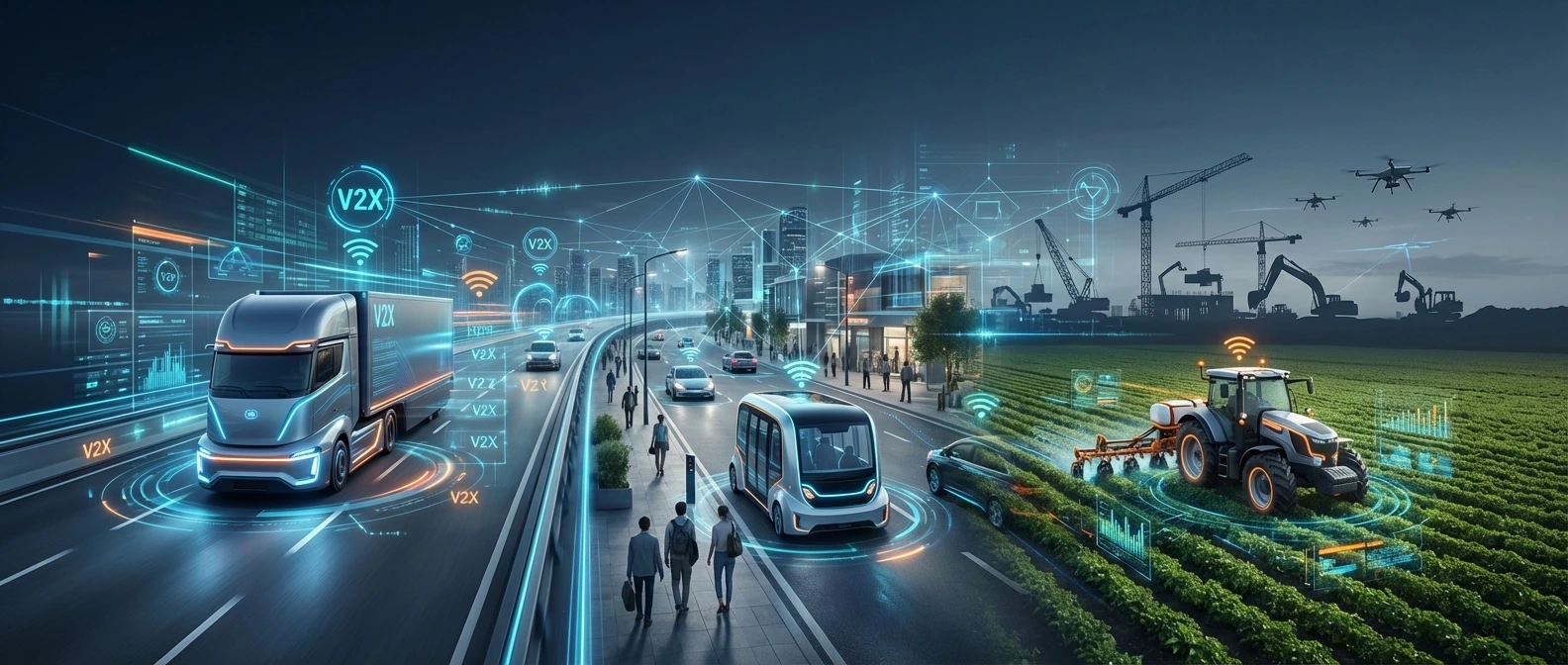
Autonomous Driving Powering: Six Industries, One Revolution
Autonomous driving is reshaping transportation, logistics, public services, heavy industry, defense, and agriculture. From last‑mile delivery to open‑pit mines and smart public transit, AI‑driven vehicles are enabling safer, more efficient, and data‑centric operations across the entire value chain.
Logistics & Freight
- Optimising last‑mile delivery with autonomous trucks
- Warehouse integration for automated loading and unloading
- Cross‑border freight corridors: challenges and solutions
- Platooning convoys for fuel efficiency
- Predictive maintenance through vehicle telematics
- Regulatory frameworks for self‑driving HGVs
Ride‑Hailing & Shared Mobility
- Shifting fleet ownership to autonomous vehicle subscriptions
- Dynamic routing algorithms for on‑demand services
- Passenger safety protocols in driverless shuttles
- Urban parking optimisation with robotic valet systems
- Accessibility for elderly and disabled riders
- Data privacy and trust in shared autonomous fleets
Public Transit & Infrastructure
- Integrating autonomous buses into existing networks
- Smart traffic signals coordinated with driverless fleets
- Dedicated lanes for autonomous shuttles
- Multi‑modal hubs linking AVs with trains and metros
- Public acceptance and community engagement strategies
- Infrastructure upgrades for 5G‑enabled V2X communication
Mining & Construction
- Driverless haul trucks in open‑pit mines
- Autonomous bulldozers and excavators for site prep
- 3D site mapping with lidar‑equipped AVs
- Collision avoidance in dynamic construction zones
- Fleet coordination for earth‑moving efficiency
- Worker safety protocols around autonomous machinery
Defense & Security
- Unmanned convoys for logistics resupply
- Autonomous reconnaissance vehicles in complex terrain
- Swarm robotics for coordinated UAV‑UGV operations
- Secure communication networks for AV fleets
- Ethical and legal implications of lethal autonomous weapons
- Battlefield mapping and obstacle detection with lidar
Agriculture & Farming
- Autonomous tractors for precision tilling and seeding
- Drone‑AV collaboration for crop monitoring and spraying
- Field mapping with 3D lidar for terrain‑adaptive routing
- Harvest automation with driverless combine harvesters
- Soil health prediction models powered by AV data
- Regulatory and safety considerations for rural deployment
Pixelwise Segmentation
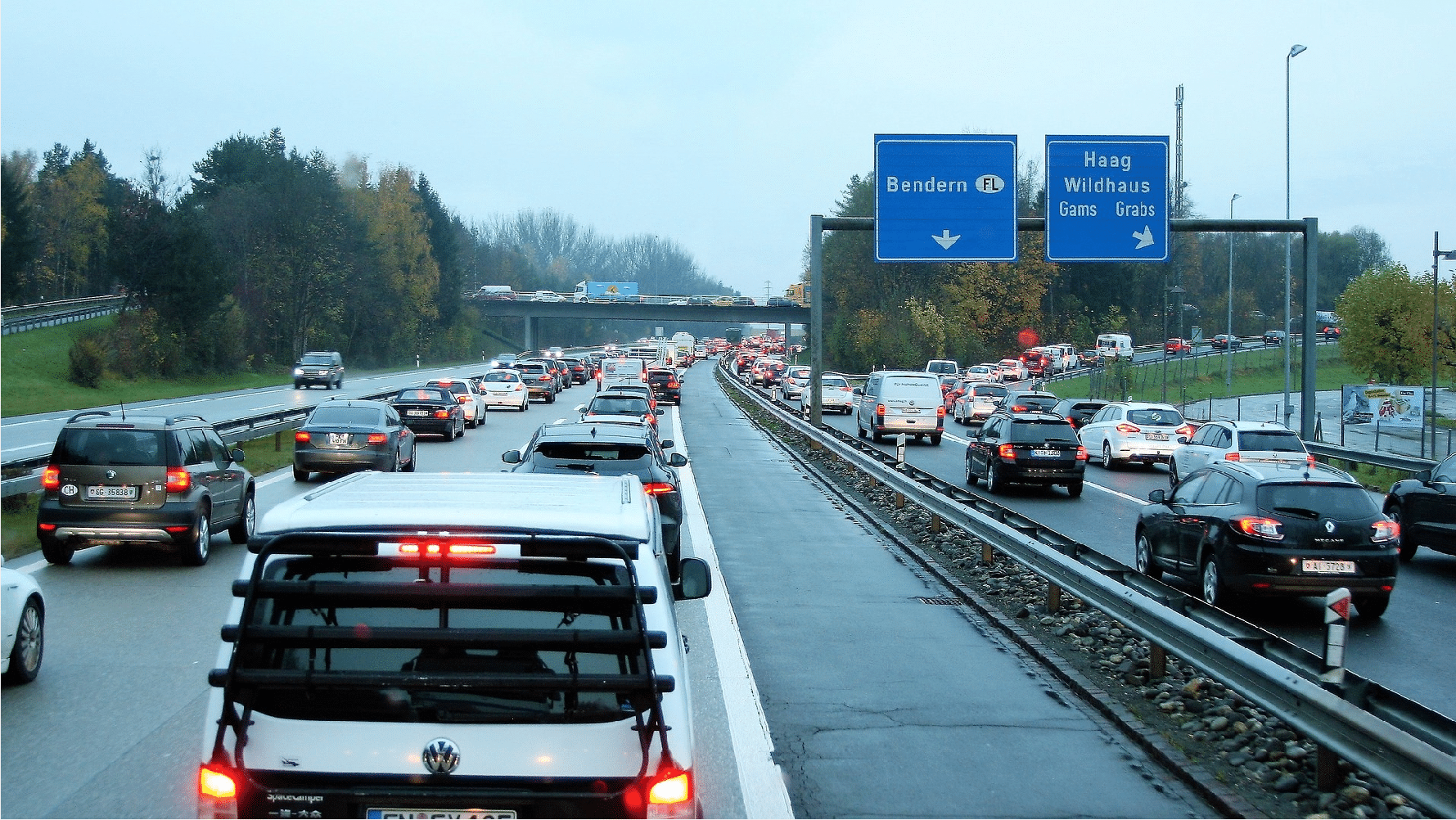
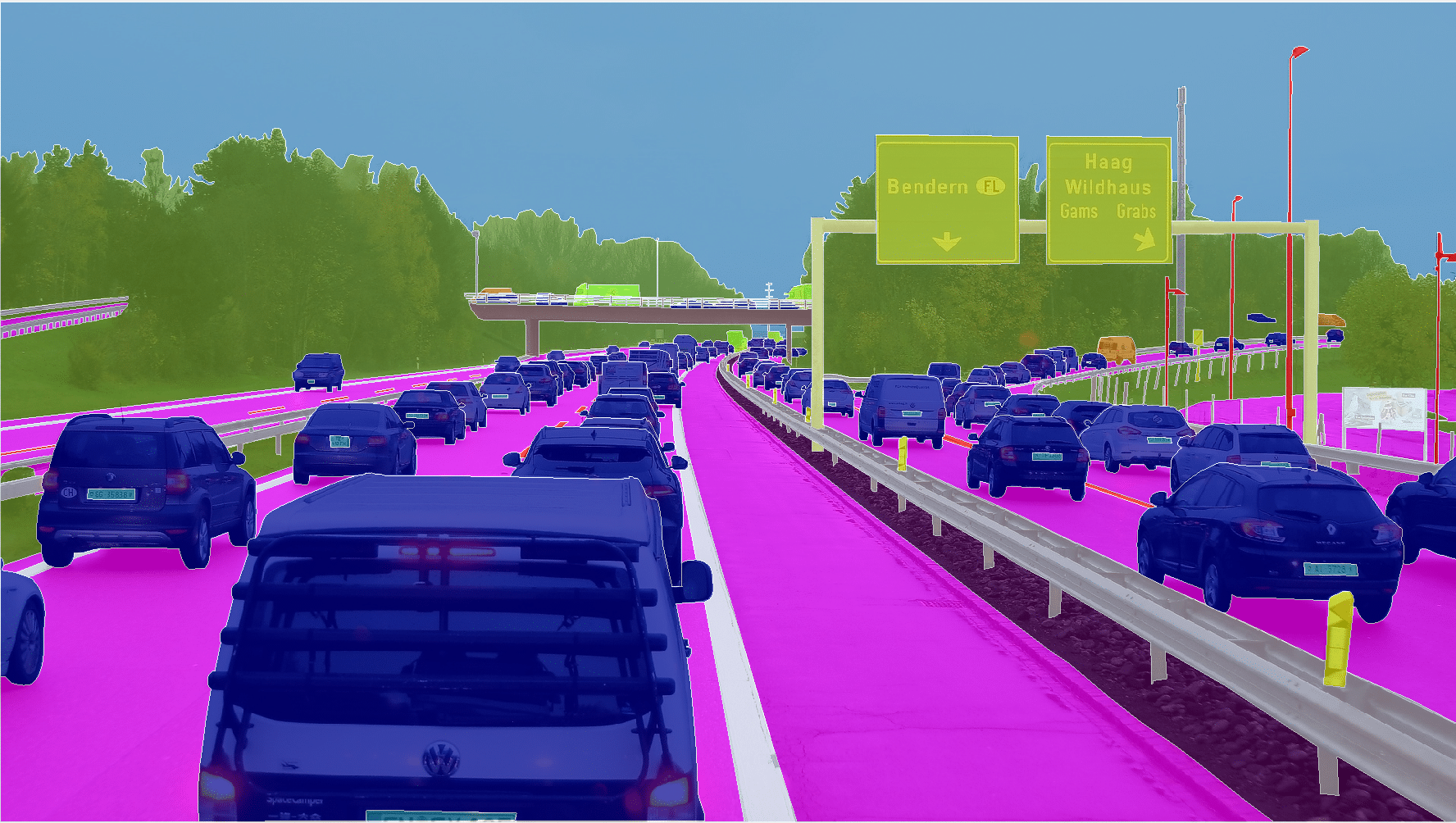
To have a reliable autonomous vehicle, it is crucial to have a safe distance with the nearby objects which have to be localized precisely with their boundaries and semantic meanings which is called pixel-wise semantic segmentation. Unlike bounding boxes, semantic segmentation can tackle challenges such as occlusion better as each pixel represents one semantic class. To develop and train AI models for this task with confidence, polygon annotation is required. We offer high-quality and inexpensive polygon annotation both in image and video for your AI algorithm plus instance-wise semantic segmentation to distinguish each object instance uniquely. Your AI algorithm trained with our high-quality labels ensures a reliable and safe journey from A to B.
High‑Precision Object Detection for Autonomous Driving
Vertix Robotics delivers rapid, high‑accuracy object detection annotation designed for safety‑critical autonomous systems and real‑time perception models.
Our annotation pipelines support multiple bounding box formats — including horizontal, rotated, and oriented boxes — enabling precise localization and directional awareness for complex driving environments. Powered by advanced AI‑assisted labeling tools and a skilled annotation team, Vertix ensures efficient workflows, strict quality control, and scalable data processing to support faster model development and safer autonomous mobility solutions.
Multi‑Format Bounding Boxes
Support for horizontal, rotated, and oriented boxes for precise spatial understanding.
Sub‑Second Processing
Optimized annotation workflows designed for high‑speed dataset production.
AI‑Assisted Labeling
Advanced annotation tools that boost efficiency while maintaining human‑level accuracy.
Rigorous Quality Control
Multi‑stage validation ensuring reliable datasets for safety‑critical autonomous systems.
Bounding Box
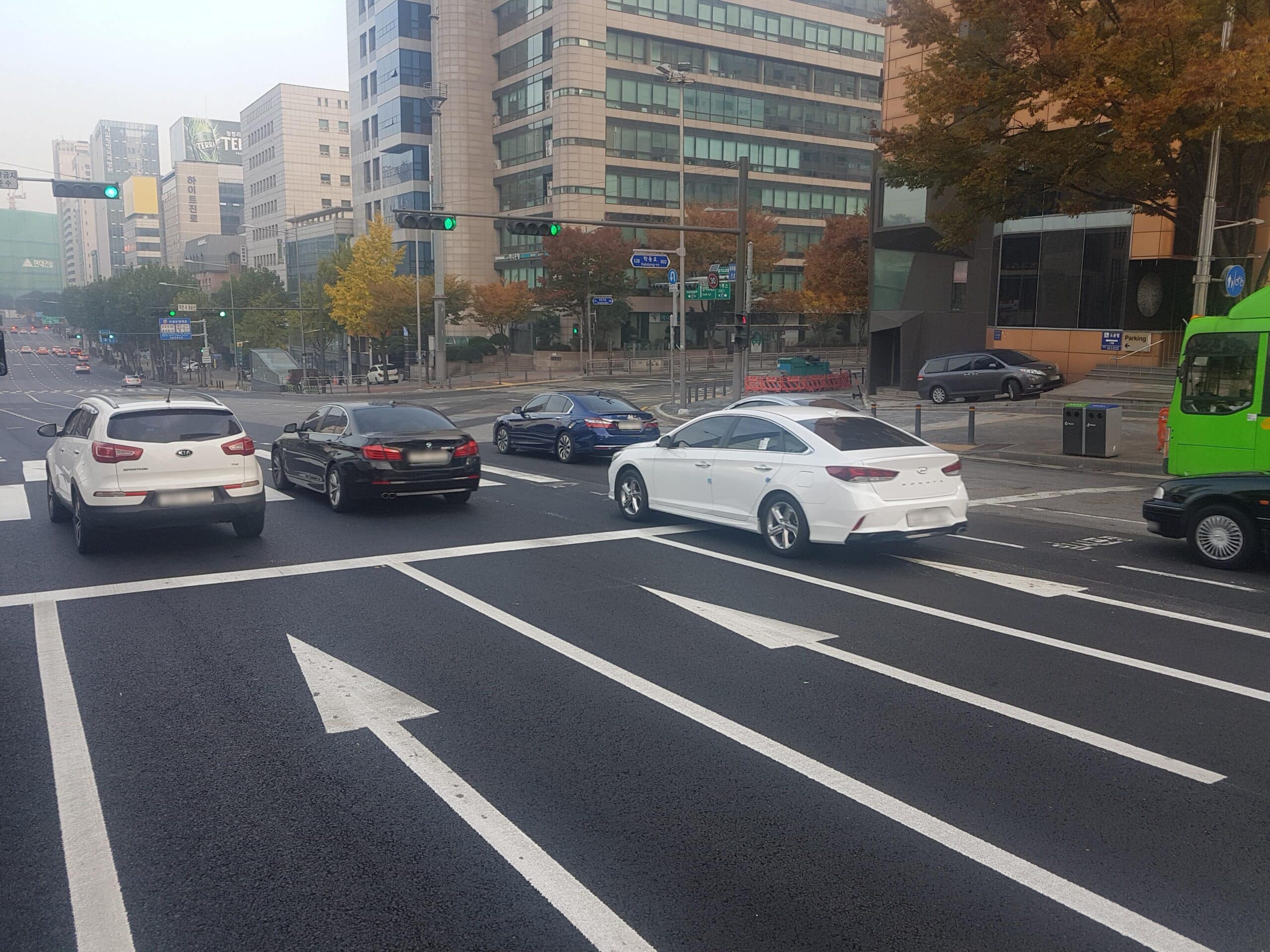
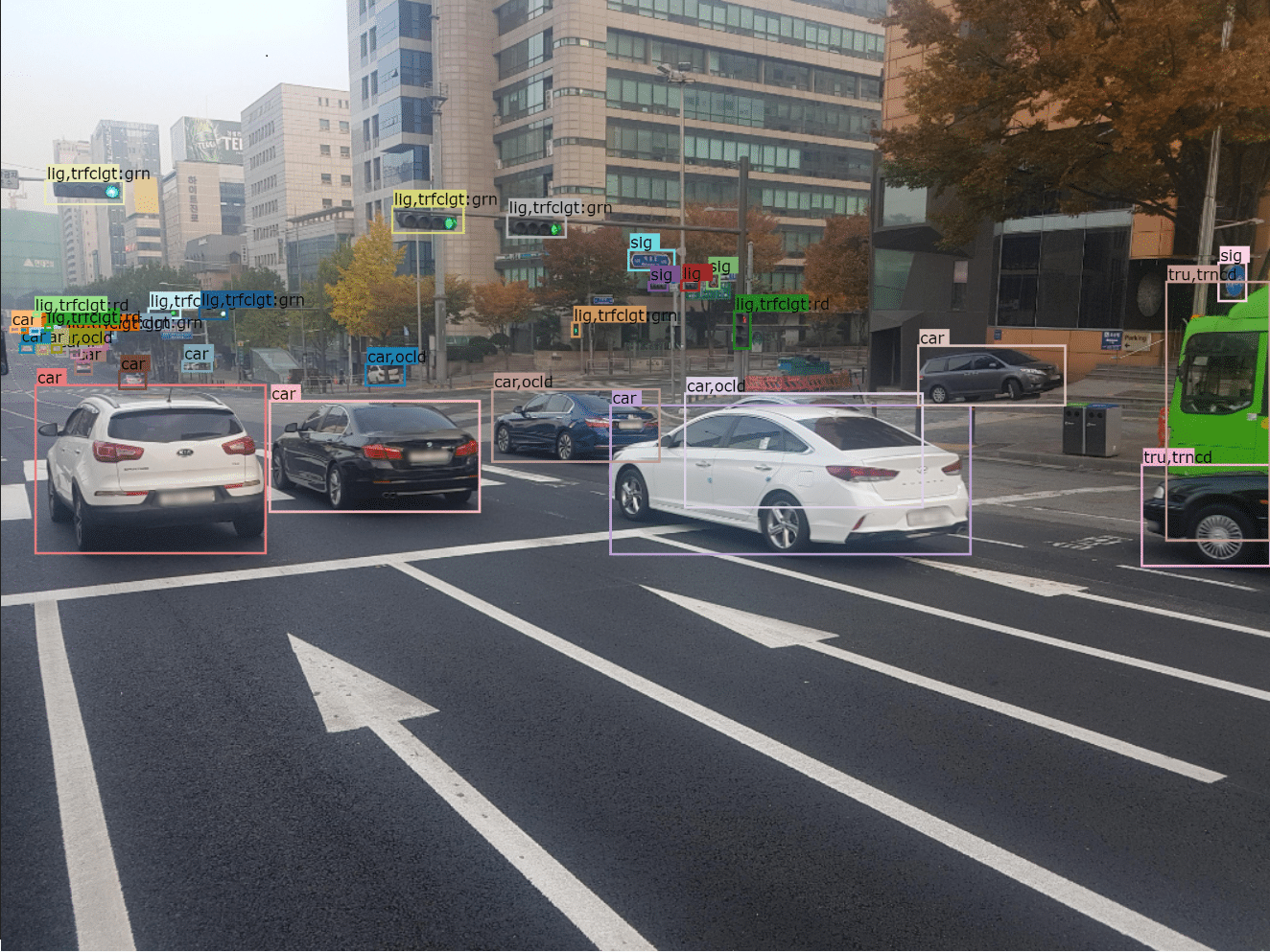
A reliable autonomous vehicle shall be swift in decision making protecting the passengers and the driver in hazardous situations and to ensure a calm and full of joy ride. Processing of images to localize objects with bounding boxes is called object detection. As the localization is done using bounding boxes the actual boundaries of objects are captured. However, it offers the processing less computationally heavy task to localize an object in a portion of a second. We offer you three types of bounding boxes: Horizontal, Rotated and Oriented. The oriented bounding box can give hints about in which direction an object is heading to.
High‑Precision Object Detection for Autonomous Driving
Vertix Robotics delivers rapid, high‑accuracy object detection annotation designed for safety‑critical autonomous systems and real‑time perception models.
Our annotation pipelines support multiple bounding box formats — including horizontal, rotated, and oriented boxes — enabling precise localization and directional awareness for complex driving environments. Powered by advanced AI‑assisted labeling tools and a skilled annotation team, Vertix ensures efficient workflows, strict quality control, and scalable data processing to support faster model development and safer autonomous mobility solutions.
Multi‑Format Bounding Boxes
Support for horizontal, rotated, and oriented boxes for precise spatial understanding.
Sub‑Second Processing
Optimized annotation workflows designed for high‑speed dataset production.
AI‑Assisted Labeling
Advanced annotation tools that boost efficiency while maintaining human‑level accuracy.
Rigorous Quality Control
Multi‑stage validation ensuring reliable datasets for safety‑critical autonomous systems.
3D Bounding Box(Cuboid)
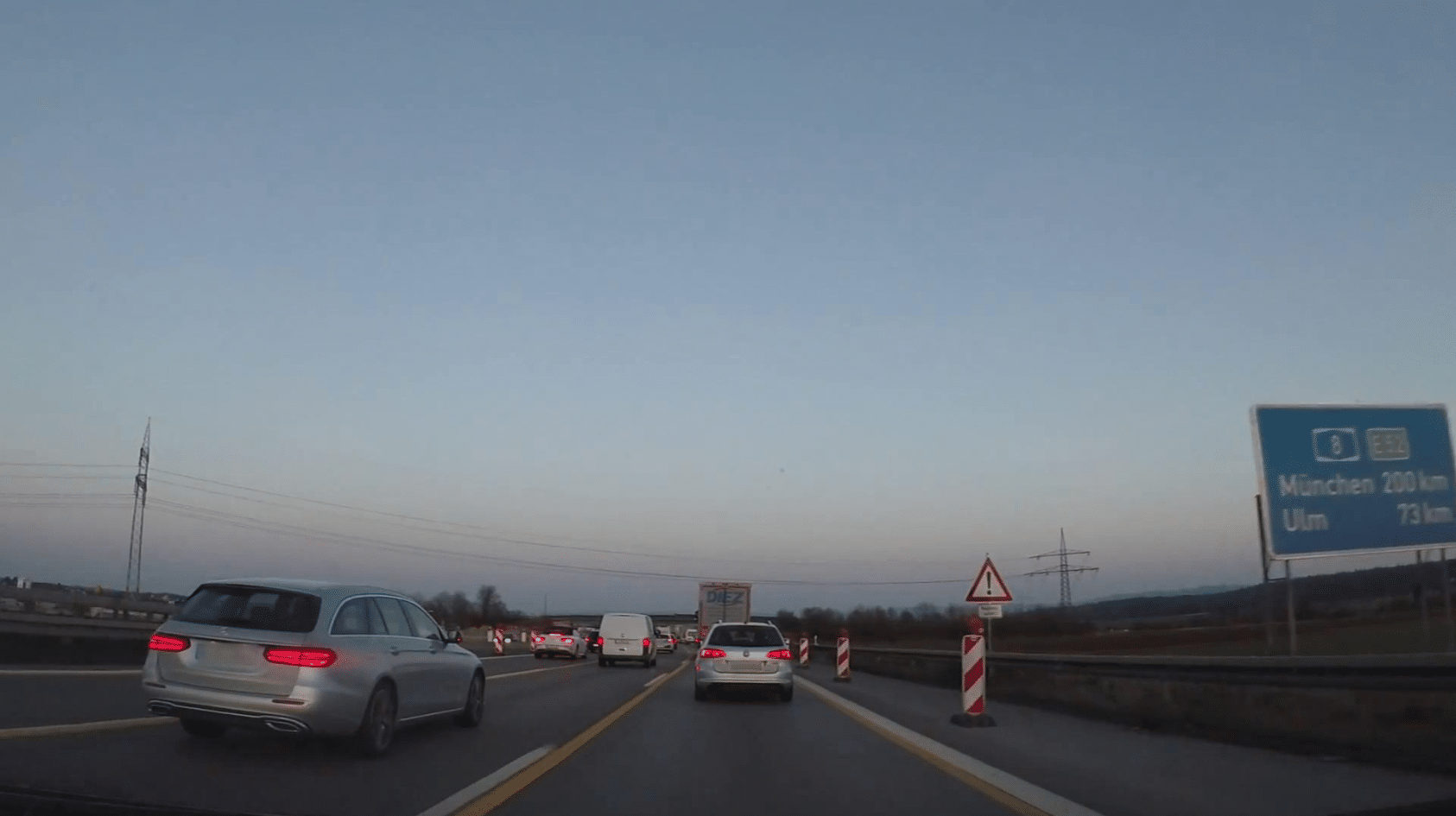
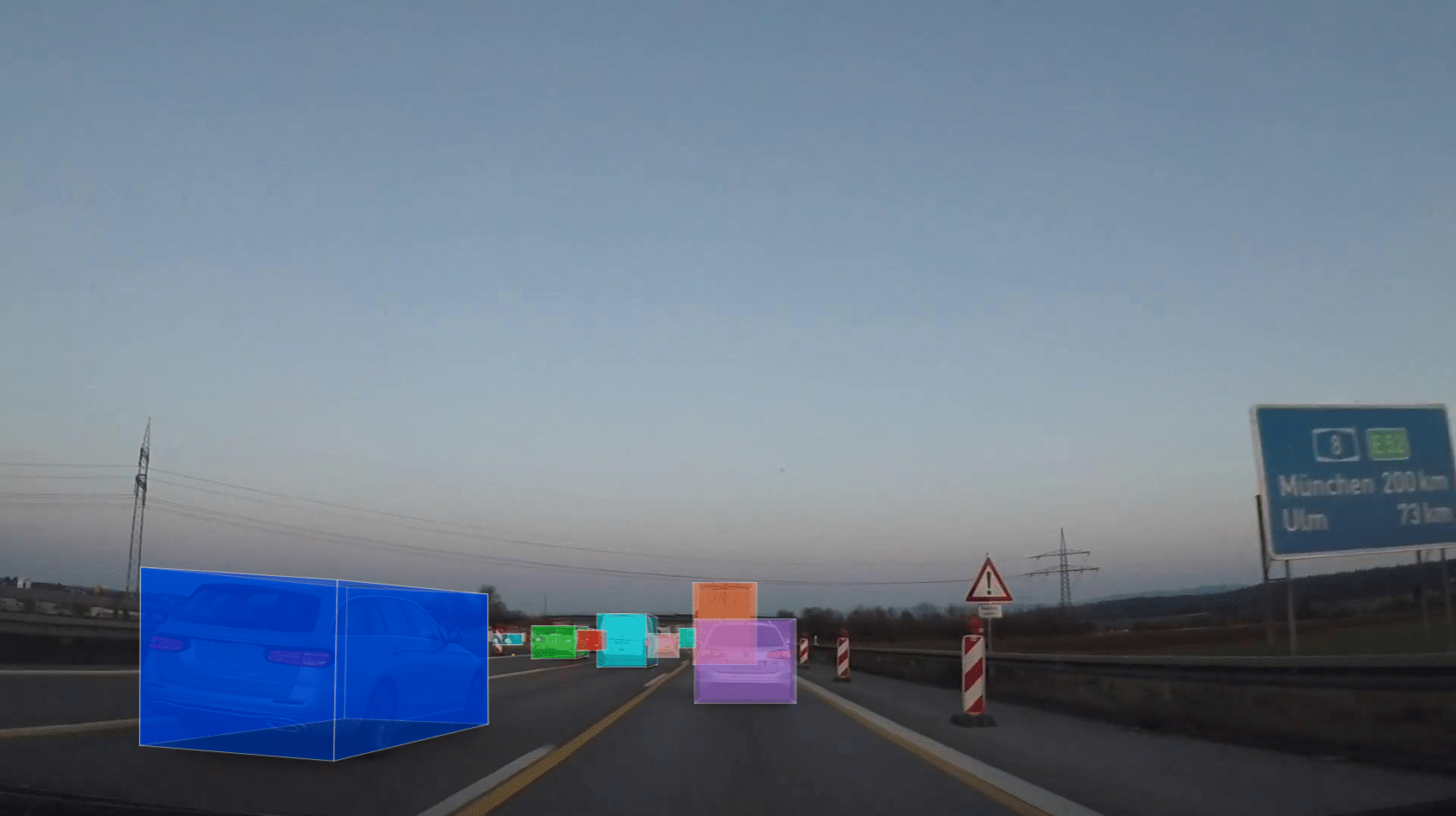
We live and drive in a three-dimensional world, and to achieve full awareness and understanding of our surroundings, it’s essential to detect and locate objects in 3D space. Vertix Robotics offers precise 3D object detection annotation in both images and videos using 3D bounding boxes, also known as cuboids. These annotations enable AI algorithms to perceive depth, orientation, and spatial positioning—critical for applications like autonomous driving, robotics, augmented reality, and advanced surveillance systems—ensuring safer, smarter decision-making in real-world environments.
Advanced 3D Object Detection for Real‑World AI
Vertix Robotics delivers high‑precision 3D object detection annotation powered by AI‑assisted cuboid labeling and rigorous quality assurance.
Our specialized annotation tools and expert team generate accurate spatial, depth, and orientation data for complex environments. Designed for autonomous driving, robotics, and augmented reality applications, our scalable infrastructure and optimized workflows ensure rapid turnaround while maintaining strict quality control. With Vertix Robotics, you gain reliable datasets that enable AI systems to understand the real world with greater accuracy and safety.
AI‑Driven Cuboid Labeling
Advanced cuboid annotation tools for accurate 3D object detection and spatial modeling.
Precise Depth & Orientation
Detailed spatial data that improves perception and decision‑making in AI systems.
Scalable Infrastructure
Secure and efficient pipelines capable of processing large‑scale 3D datasets.
Rapid Turnaround
Optimized workflows enabling faster dataset delivery for AI model development.
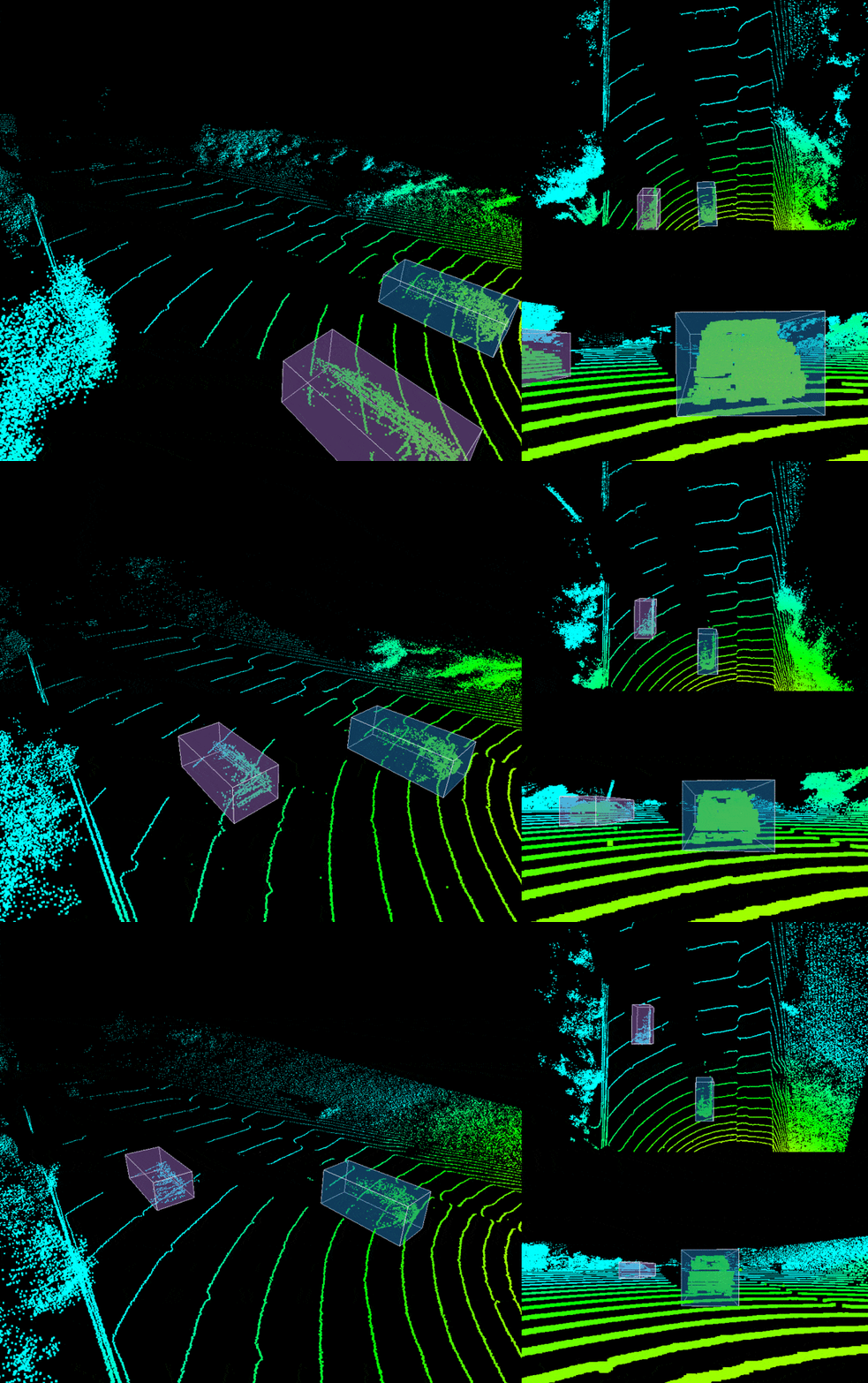
Point Cloud(Lidar, Radar)
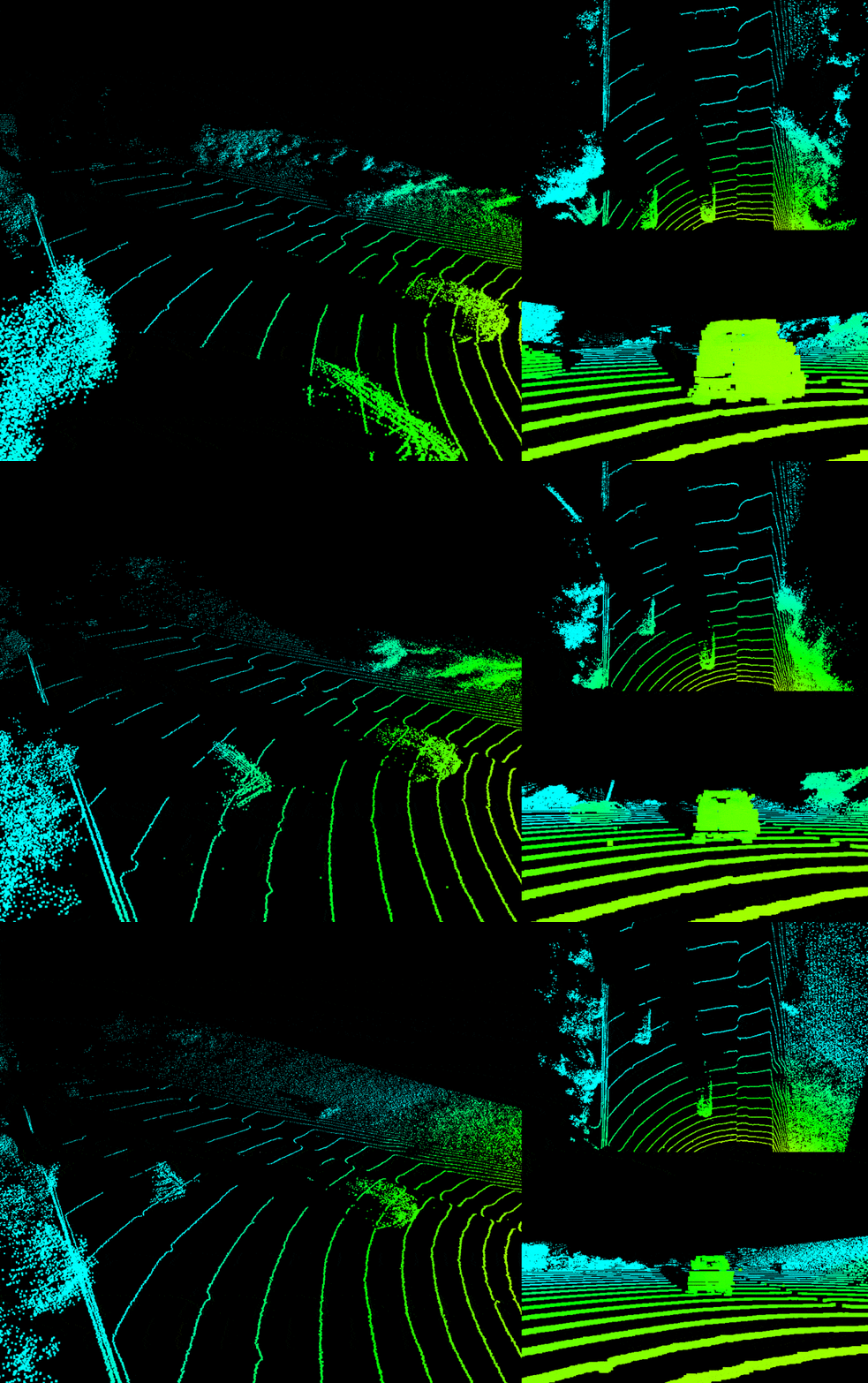
A consistent 360° perception of the surrounding is essential for an autonomous vehicle to operate safely and reliably all the time. A combination of laser sensors such as LiDAR can provide a vehicle with this perception with point cloud data. This perception capability is boosted even further by RADAR capturing objects far ahead of the vehicle. They do not have the shortcomings of optical cameras for instance in poor weather conditions. To design an AI algorithm to be capable of localizing objecting using laser data, we provide you with accurate, and inexpensive 3D bounding box and 3D point-wise segmentation.
Scalable 3D Perception Annotation for Autonomous Systems
Vertix Robotics delivers comprehensive 3D perception annotation powered by AI‑driven tools designed for LiDAR and RADAR point cloud datasets.
Our advanced annotation workflows generate precise 3D bounding boxes and point‑wise segmentation to capture accurate spatial context across dynamic environments. By combining intelligent labeling tools with experienced annotation teams, Vertix ensures reliable 360° perception across all conditions — day, night, or adverse weather. With robust quality assurance processes, secure infrastructure, and scalable pipelines, we enable faster development of high‑performance AI models for safer and smarter autonomous navigation.
LiDAR & RADAR Expertise
Specialized annotation for complex point cloud data across autonomous perception pipelines.
3D Bounding Boxes
Accurate spatial localization of objects for advanced 3D detection and tracking models.
Point‑Wise Segmentation
Fine‑grained labeling of point cloud data for detailed scene understanding.
All‑Condition Perception
Reliable datasets supporting AI performance in day, night, and challenging weather.
Sensor Fusion
We as humans have several senses to shape our understanding of the environment around us by fusing the output of sense with each other. Vehicles like us need to combine all their perceiving sensors to capture the moment correctly in order to make the right decision. However, the annotation of each sensor data separately, not only multiplies the required effort, but also can lead to inconsistencies between the annotations of the same object in the different sensor outputs. In Vertix, we have designed an efficient AI-powered sensor fusion tool that only one sensor output has to be annotated and the annotation of the rest of sensors are created automatically according to positional location. This not only decreases the required effort and costs by several times, but also it brings consistency to the final output.
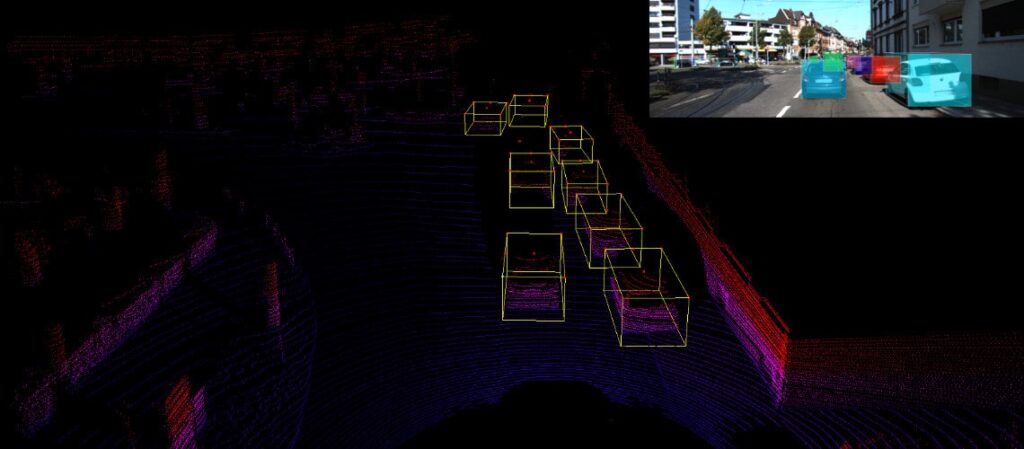
AI‑Powered Multi‑Sensor Fusion Annotation
Vertix Robotics revolutionizes multi‑sensor annotation with an advanced AI‑powered sensor fusion platform that automates cross‑modal labeling across LiDAR, RADAR, cameras, and additional sensors.
Our intelligent fusion workflow allows annotators to label a single sensor stream while automatically propagating annotations across all aligned modalities. This dramatically reduces manual effort, eliminates cross‑sensor inconsistencies, and accelerates dataset production. Combined with our secure infrastructure, strict QA pipelines, and experienced annotation specialists, Vertix delivers reliable, high‑quality fused datasets that empower AI systems to perceive complex environments and make human‑level decisions across diverse real‑world scenarios.
AI‑Driven Sensor Fusion
Automated cross‑modal labeling that aligns LiDAR, RADAR, and camera data seamlessly.
80% Less Annotation Effort
Label once and propagate across modalities, dramatically reducing cost and manual work.
Perfect Cross‑Sensor Alignment
Eliminate inconsistencies between sensors with synchronized annotation pipelines.
Reliable & Secure Data
Enterprise‑grade security, rigorous QA, and expert teams ensure trusted datasets.
Video Tracking
In an autonomous vehicle, it is required to foresee hazardous situations and to predict the future at least by some golden seconds to prevent the material damage or endangering the pedestrians. This goal can be achieved by detection of each object and tracking it by keeping its object identity. This will allow us to predict the future if an object is occluded by another object for a while and will appear afterwards. This will also allow to predict the trajectory of the object and to calculate whether this trajectory will intersect with the vehicle’s trajectory. We offer you single-object tracking (SOT) and multi-object tracking (MOT) annotation using our Human-guided AI annotation tool to deliver you with high-quality and seamless labeled data.
High‑Precision Object Tracking for Dynamic Environments
Vertix Robotics delivers accurate single‑object and multi‑object tracking annotations using advanced Human‑guided AI tools that maintain consistent object identities across video frames.
Our intelligent annotation workflow captures detailed object trajectories even through occlusions, enabling robust temporal understanding for autonomous systems. By preserving identity continuity and motion patterns across sequences, Vertix helps generate datasets that support predictive perception — allowing AI models to anticipate movements and react within the critical “golden seconds.” With rigorous QA processes, scalable infrastructure, and experienced annotators, we deliver reliable tracking datasets that empower autonomous vehicles to navigate complex, real‑world environments safely and intelligently.
Human‑Guided AI Tools
Advanced tracking systems combining automation with expert human validation.
Identity Consistency
Maintain persistent object IDs across frames for reliable temporal learning.
Occlusion‑Aware Tracking
Capture trajectories accurately even when objects temporarily disappear.
Predictive AI Datasets
Enable models to anticipate motion and react within critical safety windows.
Lane Marking
In Advanced Driver Assistance Systems (ADAS), there is a system called Lane Departure Warning. More broadly, an autonomous vehicle should be able to localize itself between lanes and to have an understanding of lane-marking meanings. Like humans learning the meaning of the lane-markings, an autonomous vehicle should be taught to understand the message conveyed by each lane-marking class. In Vertix, using our AI-powered annotation tool, we are able to annotate even very tiny lane-markings with their semantics several times faster than manual annotation and yet with consistency and high-quality.
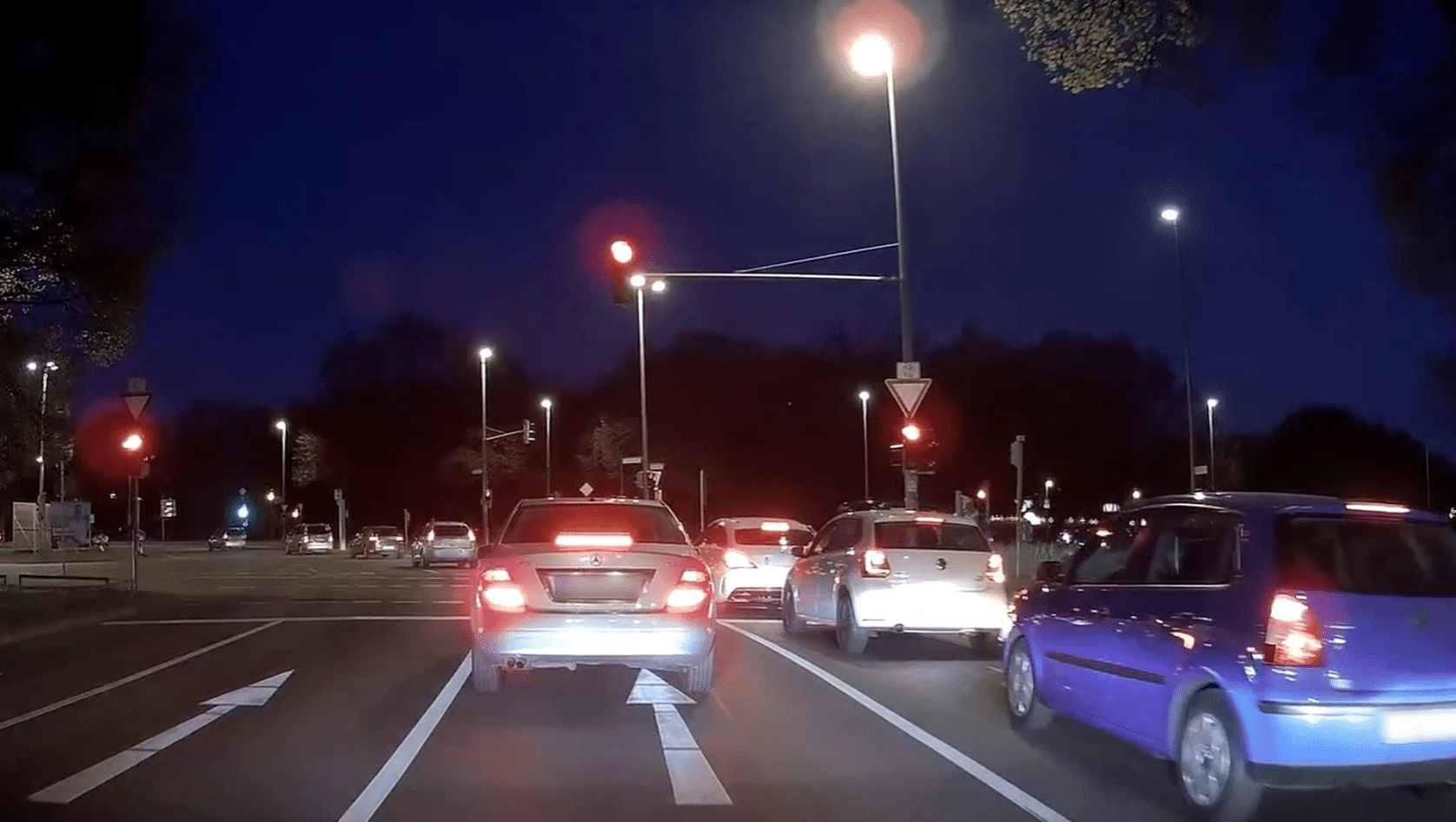
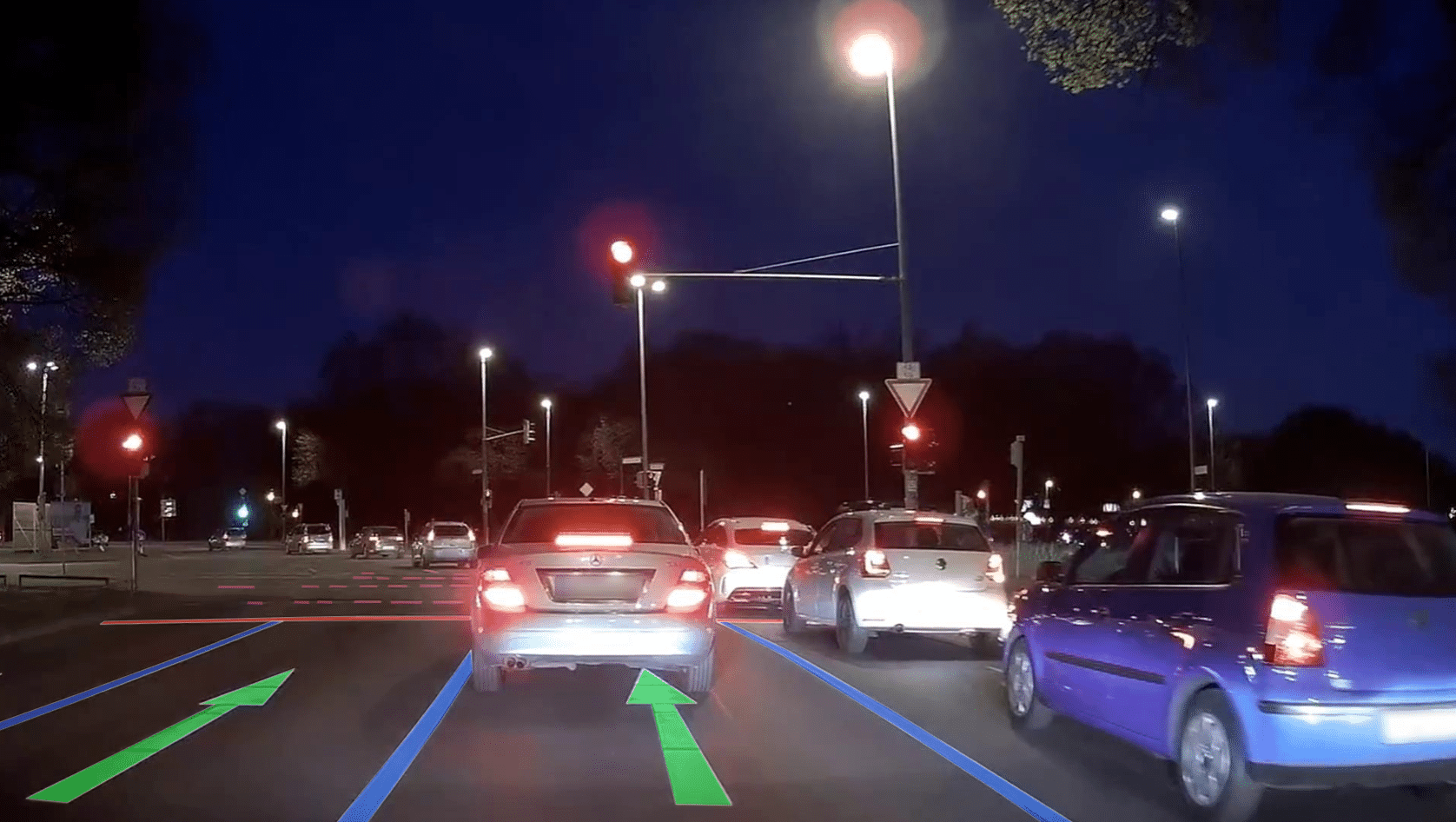
High‑Precision Lane‑Marking Annotation for ADAS & Autonomous Driving
Vertix Robotics delivers rapid, high‑precision lane‑marking annotation using our AI‑powered Vertix tool, purpose‑built for safety‑critical ADAS and autonomous driving systems.
We accurately capture fine‑grained lane‑marking semantics — including solid, dashed, colored, and complex multi‑lane structures — at speeds far exceeding manual annotation workflows. Backed by robust quality‑assurance pipelines and scalable infrastructure, Vertix ensures consistent, class‑accurate lane data that enables autonomous vehicles to localize precisely, issue timely warnings, and navigate complex road environments with confidence.
AI‑Powered Vertix Tool
Purpose‑built for lane‑marking detection with automation guided by expert validation.
Fine‑Grained Semantics
Accurate labeling of solid, dashed, colored, and complex lane structures.
Exceptional Consistency
Uniform class definitions and annotation quality across large‑scale datasets.
Built for ADAS Safety
Lane data optimized for localization, lane‑keeping, warnings, and navigation tasks.
Drivable Area
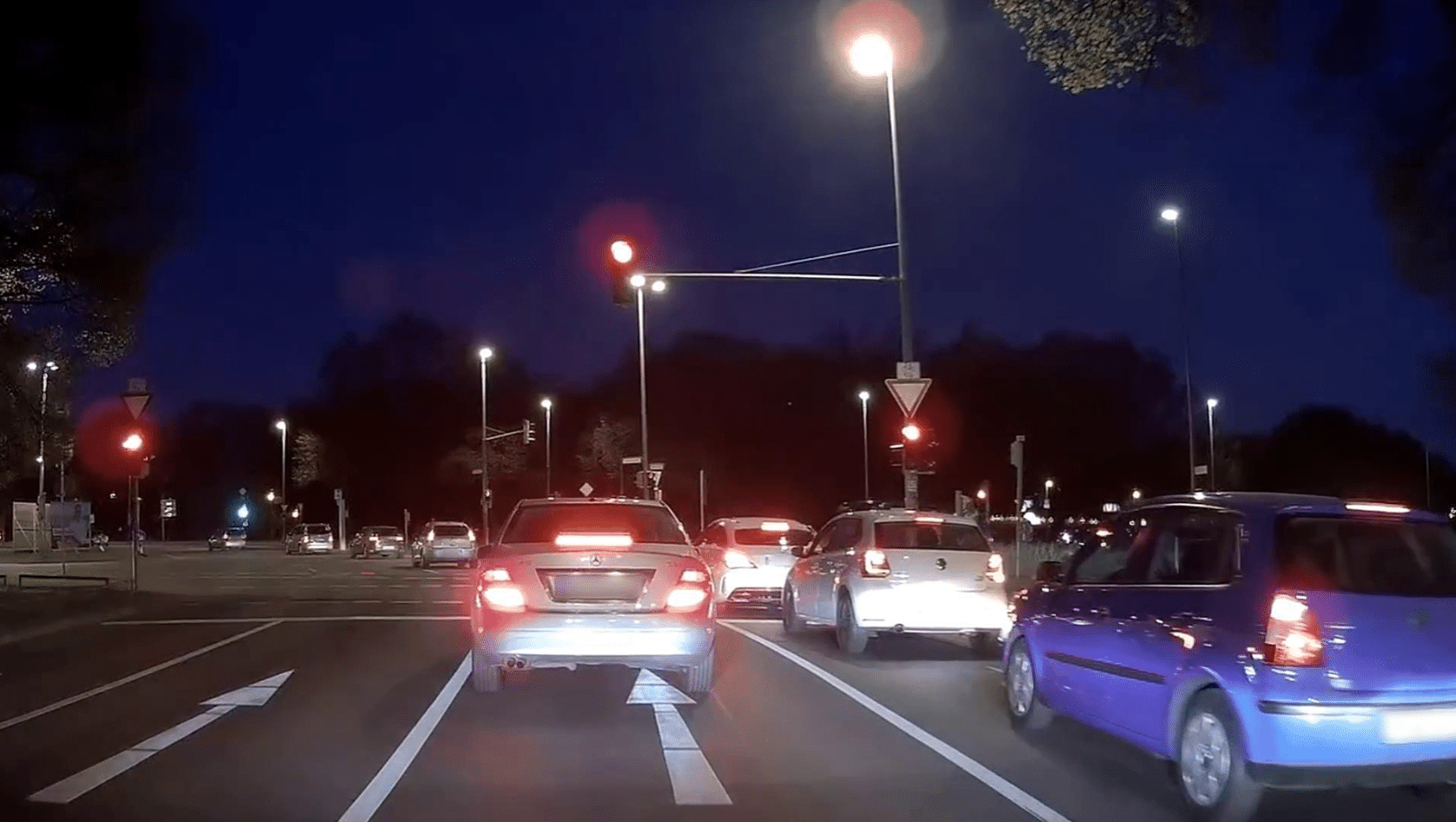
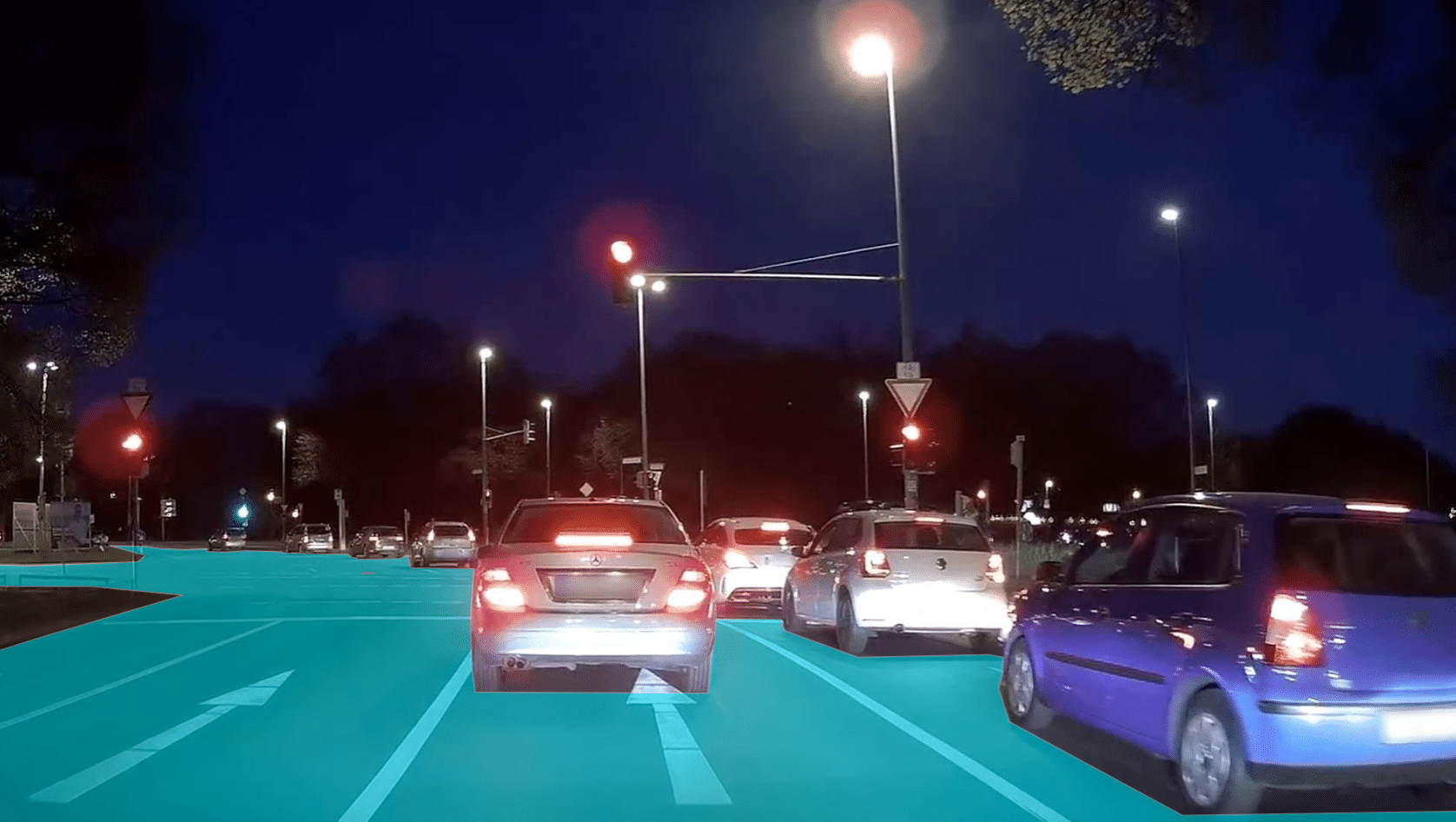
An autonomous vehicle should know where it can drive and where it cannot. This not only helps the vehicle maintain its journey and take control when needed, but also ensures that in hazardous situations, it can navigate to a safe zone instead of colliding with static objects—protecting both the vehicle and its passengers. Accurate drivable area detection enhances safety, improves decision-making, and is essential for reliable autonomous navigation in complex and unpredictable real-world environments.
Accurate Drivable‑Area Segmentation for Safer Autonomous Navigation
Vertix Robotics delivers industry‑leading drivable‑area detection annotation with precise multi‑class segmentation of safe driving zones for ADAS and autonomous vehicle perception.
Using AI‑driven annotation tools and expert human validation, we generate highly accurate labels that enable autonomous systems to distinguish between traversable and non‑traversable terrain in real time. Our scalable workflows, strict quality‑assurance processes, and rapid turnaround ensure consistent datasets that help vehicles navigate complex urban and off‑road environments safely. With Vertix, your AI models receive the reliable spatial understanding needed to make split‑second driving decisions and guide vehicles along the safest possible paths.
Multi‑Class Segmentation
Detailed labeling of drivable and non‑drivable regions for precise road understanding.
AI‑Driven Annotation
Advanced tools combined with expert review for scalable, high‑accuracy datasets.
Robust QA Pipeline
Multi‑stage quality control ensures consistent labels across large‑scale datasets.
Safer Path Planning
Enable AI models to identify safe routes and navigate complex environments confidently.
Autonomous Driving Annotation Services
Vertix Robotics offers comprehensive annotation services designed to power autonomous driving and Earth Observation AI models with high-quality, scalable, and cost‑effective data. Their end-to-end workflow covers everything from pixel-wise semantic segmentation and bounding box annotation to advanced 3D cuboid labelling, point‑cloud processing, sensor fusion, object tracking, lane‑marking semantics, and drivable‑area detection. Vertix Robotics ensures reliable, consistent annotations that enhance model performance in complex real‑world environments by leveraging AI-powered tools and a dedicated annotation team. Their services support diverse industries—transportation, logistics, smart cities, agriculture, healthcare, and manufacturing—delivering the data foundation needed for safer, smarter, and more efficient autonomous systems.

Scalable AI Data Annotation for Autonomous Driving & Earth Observation
Vertix Robotics delivers precise, scalable datasets using AI‑driven annotation tools, expert validation workflows, and secure data infrastructure.
Our advanced annotation pipelines combine automation with human expertise to produce highly reliable datasets for safety‑critical AI systems. With stringent quality‑assurance processes, secure infrastructure, and rapid turnaround times, Vertix enables organizations to train and deploy models faster while maintaining exceptional data accuracy. Our flexible services support both autonomous driving and Earth Observation applications, helping teams reduce development costs, accelerate model training, and build safer, more intelligent perception systems.
AI‑Driven Annotation
Advanced tools accelerate labeling workflows while maintaining high precision.
Strict QA Processes
Multi‑stage validation pipelines ensure consistent and reliable datasets.
Secure Infrastructure
Robust data security and controlled environments for sensitive AI datasets.
Rapid Turnaround
Scalable workflows that accelerate model training and deployment cycles.
What is autonomous driving data annotation?
Autonomous driving data annotation is the process of labeling images, videos, and sensor data so AI models can understand road environments. It includes tasks such as object detection, semantic segmentation, lane marking labeling, 2D and 3D bounding box annotation, point‑cloud labeling, and object tracking to train perception systems used in autonomous vehicles.
Why is high‑quality annotation important for autonomous vehicles?
High‑quality annotations allow AI models to accurately detect objects, understand road structure, and predict movement. Precise and consistent labels improve training performance, reduce false positives and false negatives, and help autonomous systems make safer and more reliable decisions in complex real‑world environments.
What types of annotation services does Vertix Robotics provide for autonomous driving?
Vertix Robotics provides pixel‑wise semantic segmentation, polygon annotation, 2D bounding boxes (horizontal, rotated, and oriented), 3D cuboid annotation, LiDAR and RADAR point‑cloud labeling, multi‑object and single‑object tracking, lane‑marking semantics, drivable‑area detection, and AI‑powered multi‑sensor fusion annotation for autonomous driving datasets.
How does polygon and pixel‑wise semantic segmentation help autonomous driving models?
Polygon and pixel‑wise semantic segmentation provide precise object boundaries and class labels for every pixel in an image. This helps autonomous driving models handle occlusions, distinguish between adjacent objects, understand road elements such as sidewalks and vegetation, and make more accurate decisions compared to simple bounding‑box‑only approaches.
What is the difference between 2D and 3D bounding box annotation in this context?
2D bounding boxes localize objects in image space and are ideal for fast object detection. 3D bounding boxes, or cuboids, extend this into three‑dimensional space, providing depth, orientation, and spatial positioning. For autonomous driving, 3D cuboids are critical to understanding how far objects are, how they are oriented, and how they move relative to the vehicle.
How does Vertix Robotics handle LiDAR and RADAR point‑cloud annotation?
Vertix Robotics annotates LiDAR and RADAR point clouds with 3D bounding boxes and point‑wise segmentation to deliver a consistent 360° perception of the environment. This includes labeling vehicles, pedestrians, infrastructure, and terrain features so that AI models can perceive depth and obstacles accurately, even in night‑time or adverse weather conditions where cameras struggle.
What is sensor fusion annotation and how does Vertix Robotics support it?
Sensor fusion annotation aligns and propagates labels across multiple sensor modalities such as cameras, LiDAR, and RADAR. Vertix Robotics uses an AI‑powered sensor fusion tool: annotators label a primary sensor, and the system automatically projects those annotations onto other sensor streams according to positional alignment. This reduces manual effort, improves consistency, and significantly lowers annotation costs.
Why is video tracking annotation important for autonomous driving?
Video tracking annotation maintains consistent object identities across frames for vehicles, pedestrians, cyclists, and other road users. This enables autonomous driving models to estimate trajectories, predict future positions a few critical seconds ahead, and anticipate potential collisions or dangerous situations, improving overall safety and responsiveness.
What are lane‑marking and drivable‑area annotations, and why do they matter?
Lane‑marking annotation labels each type of road marking—such as solid, dashed, double, or colored lines—along with its semantic meaning. Drivable‑area annotation segments where the vehicle can safely drive versus restricted or hazardous zones. Together they enable lane keeping, lane departure warning, path planning, and safe evasive maneuvers in complex road environments.
Why should mobility companies choose Vertix Robotics for autonomous driving annotation?
Vertix Robotics combines deep domain expertise in autonomous driving with AI‑powered annotation tools, scalable infrastructure, and strict QA processes. They handle complex multi‑sensor datasets at scale, deliver precise and consistent labels, accelerate model training cycles, reduce overall project costs, and ultimately help mobility companies deploy safer and more reliable autonomous vehicle systems.