Volleyball Video Challenge
Vertix Robotics Volleyball Video Challenge
Video Review Technology for Faster, Fairer, and More Accurate Volleyball Officiating
Enabling Safe and Reliable Autonomous Mobility Through High-Quality Data Annotation
In modern volleyball, every point matters. A ball landing millimeters inside or outside the line can change the momentum of a set. A subtle block touch can decide a match. A net fault, antenna contact, or disputed line call can create frustration for players, coaches, referees, and fans. As the speed of the game increases, the pressure on referees becomes greater than ever.
That is why Vertix Robotics introduces an advanced volleyball video challenge system designed for professional clubs, leagues, sports venues, tournaments, academies, and event organizers in Dubai and beyond. By combining industrial-grade Basler vision technology, multi-angle replay, and artificial intelligence, Vertix Robotics helps sports organizations bring clarity, confidence, and transparency to volleyball officiating.
Our solution is built around one simple goal: reduce referee errors in volleyball while preserving the flow and excitement of the game.
Whether you are looking for a volleyball challenge replay platform, a volleyball VAR system, an line judge volleyball solution, or a practical volleyball hawk eye alternative, Vertix Robotics delivers a smart, scalable, and professional video review system for today’s competitive volleyball environment.

Why Volleyball Needs Smarter Video Challenge Technology
Volleyball is one of the fastest indoor sports in the world — decisions made in fractions of a second can decide entire matches. Human vision alone is no longer enough.
Serves, spikes, blocks, and defensive touches happen in micro‑moments that are often too fast for even the most experienced referees to judge perfectly in real time. Traditional officiating relies heavily on eyesight, positioning, and split‑second interpretation — but many situations are simply too complex, too fast, or too obstructed to be resolved without technological assistance. Smart video challenge systems give referees access to multi‑angle, high‑speed footage, transforming critical calls from subjective impressions into clear, visual evidence.
High‑Impact Disputed Plays
In / out ball decisions, line calls at high speed, ball crossing errors and antenna contacts often happen in blur‑level motion. A video challenge system lets officials freeze, zoom, and review these key frames with clarity instead of relying on a single, real‑time perception.
Complex Net & Contact Situations
Touches by blockers or defenders, net contacts, simultaneous actions near the net, and conflicting viewpoints between referees and line judges are inherently hard to judge from one angle. Multi‑camera review exposes subtle deflections, brushes, and overlaps that are invisible at full speed.
Trust, Transparency & Standards
For teams, smarter video challenge builds trust in outcomes. For referees, it reduces pressure and cognitive load. For spectators, it improves transparency. For leagues and organizers, it elevates the professional standard of competition and aligns volleyball with modern, technology‑assisted officiating.
How Does Volleyball Video Challenge Work?
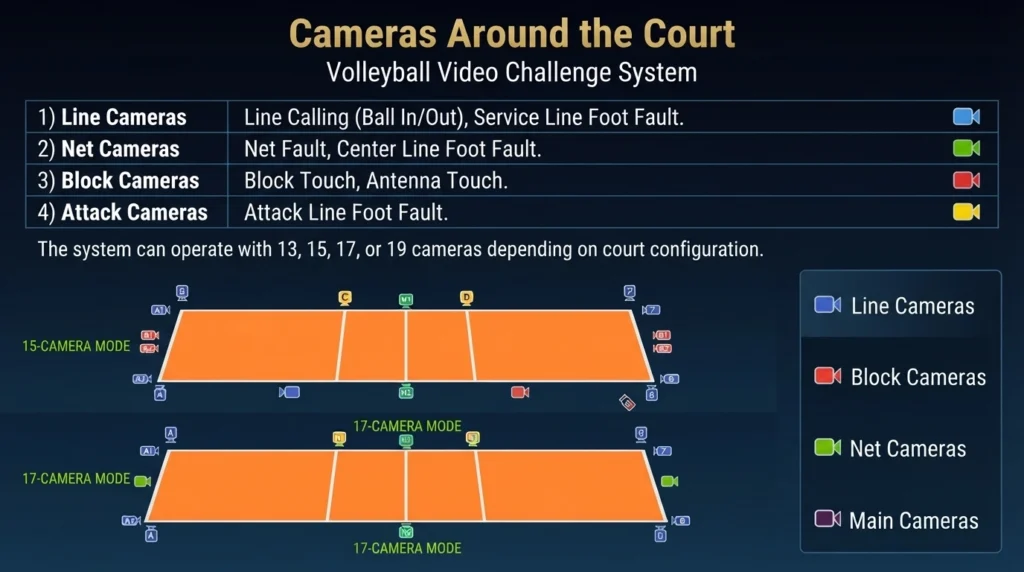
Industrial cameras are positioned around the volleyball court to capture key zones, including the end lines, side lines, net area, attack zones, and service positions. The goal is to provide clear views of the most disputed locations on the court.
Using industrial cameras for sports refereeing allows the system to capture high-quality footage with stability and precision. Basler cameras are known in machine vision applications, making them a strong choice for environments where image clarity and timing are important.
This makes basler camera volleyball replay a practical solution for venues that need more reliable review footage than standard consumer cameras can provide.
Volleyball actions can happen extremely quickly. A ball may touch a blocker’s finger or land near a line in a fraction of a second. Standard video may miss important details due to low frame rate, motion blur, or poor synchronization.
That is why high speed cameras for volleyball challenge can be essential. Higher frame rates help capture motion more clearly, allowing referees to review fast actions frame by frame.
The system can integrate computer vision and AI modules to assist with specific review situations. This may include detecting the ball path, identifying line proximity, supporting touch analysis, and helping referees navigate the most relevant frames.
This is the foundation of ai powered volleyball refereeing.
With volleyball video challenge with AI, the referee does not need to manually search through long video clips. AI can help identify the key moment, mark possible impact frames, and organize replay views for faster review.
The purpose of AI is not to create an automatic referee without human authority. Instead, it works as a smart assistant that improves speed, consistency, and confidence.
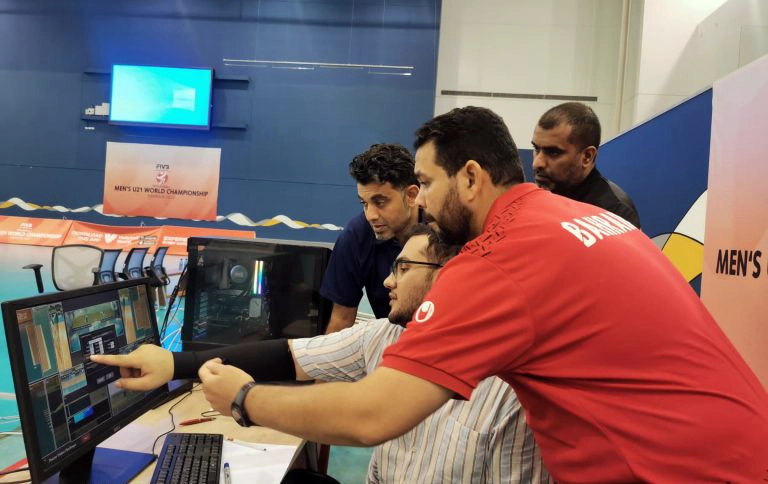
When a team requests a challenge according to video challenge rules volleyball, the referee or review official accesses the replay interface. The system displays synchronized camera views and allows playback control.
Officials can review the incident frame by frame, compare angles, zoom into relevant areas, and make a decision based on visual evidence.
After review, the final decision can be communicated to players, coaches, spectators, and broadcast teams. This helps reduce confusion and increases trust in the officiating process.
A strong smart video review system volleyball platform should not only capture footage; it should also support a clear decision workflow.
Introducing Vertix Robotics Volleyball Video Challenge System
A precision-engineered video challenge platform built for modern volleyball—combining industrial cameras, high-fidelity review, and referee-centric workflows.
Vertix Robotics provides an advanced volleyball video challenge system engineered for accuracy, speed, and reliability. Designed for sports environments in Dubai and international venues, our solution delivers clear, frame-accurate insights for critical referee decisions.
The system is designed to support referees during challenge situations by providing objective visual evidence. The final decision always remains with the match officials—but they gain access to high-fidelity information that helps them make better, more confident calls.
This is especially valuable in high-pressure moments such as an in/out challenge volleyball decision or a touch challenge volleyball review. When the game is on the line, every frame matters.
Designed for Key Volleyball Challenge Scenarios
The Vertix Robotics solution is designed around the actual problems referees face during volleyball matches.
In/Out Challenge Volleyball
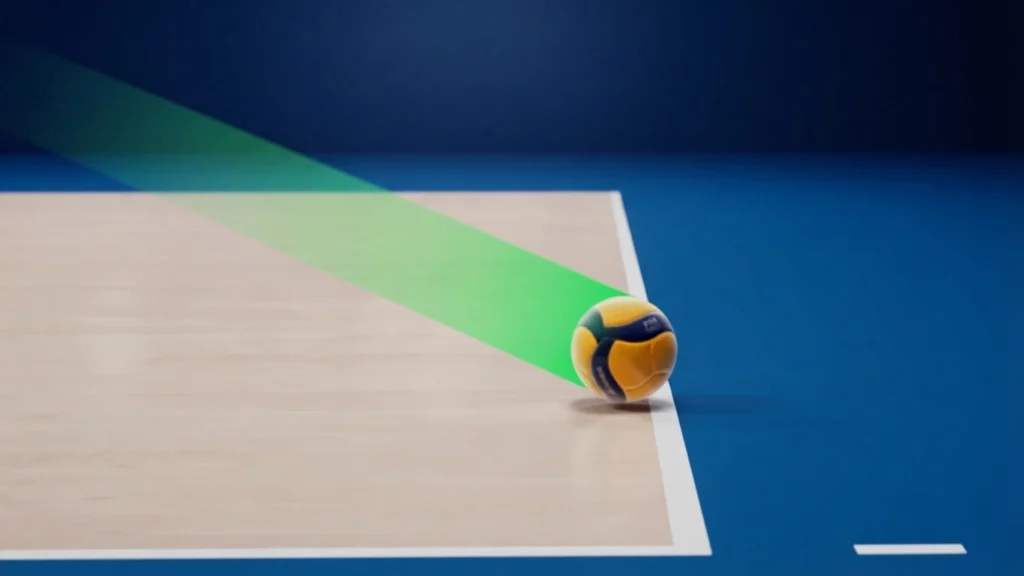
One of the most common challenges in volleyball is whether the ball landed inside or outside the court boundary. At high speed, especially near the line, this can be very difficult to judge.
Our system supports accurate line calls volleyball by providing multi-angle visual evidence and high-speed replay. With machine vision volleyball line calls, the system can support the review process by focusing attention on the ball landing zone and the court line.
This makes the solution ideal for clubs and organizers searching for an ai line judge volleyball system or a professional volleyball hawk eye alternative.

Touch Challenge Volleyball
Another common dispute occurs when a ball touches a blocker, defender, or attacker before going out. These touches can be extremely subtle. Sometimes only a finger movement, ball deflection, or change in trajectory reveals the contact.
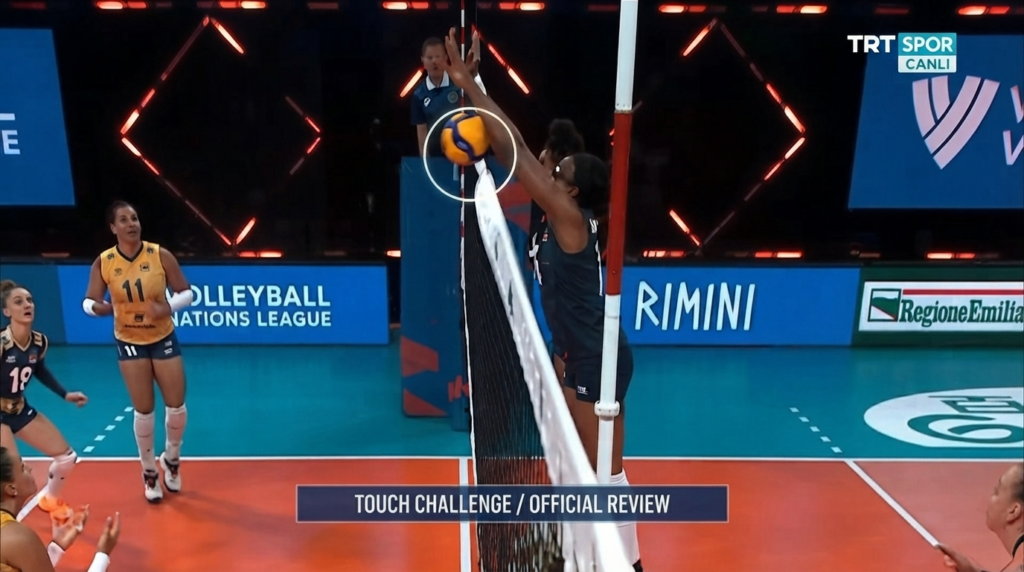
A touch challenge volleyball review benefits from synchronized replay angles, high frame rate footage, and AI-assisted moment detection. The system helps officials review the sequence more carefully and reach a fair decision.
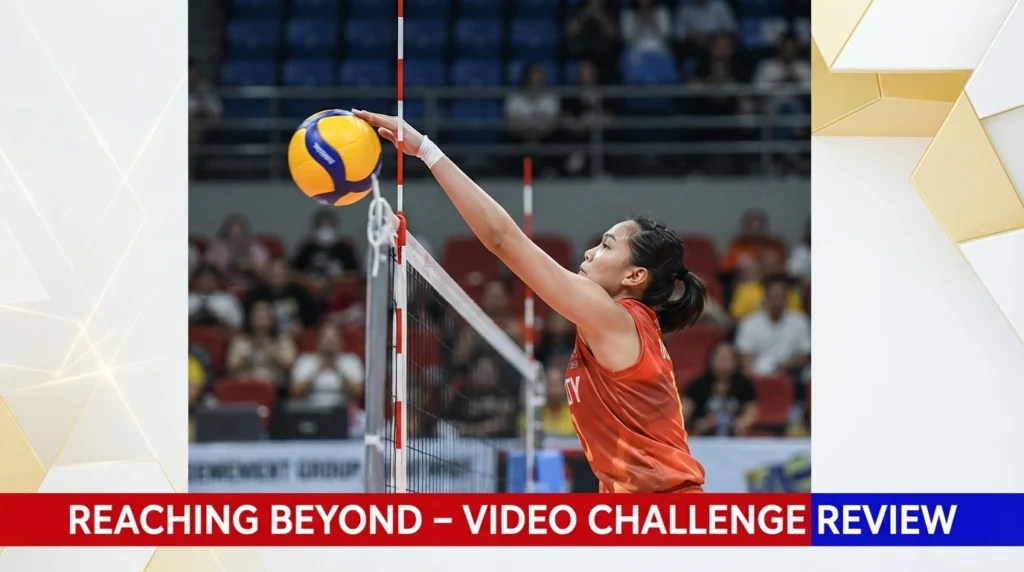
Net and Antenna Review
Net touches and antenna contacts often happen during fast offensive and defensive actions. A player may touch the net during a block, or the ball may cross near the antenna. These calls require precise visual evidence from the correct angle.
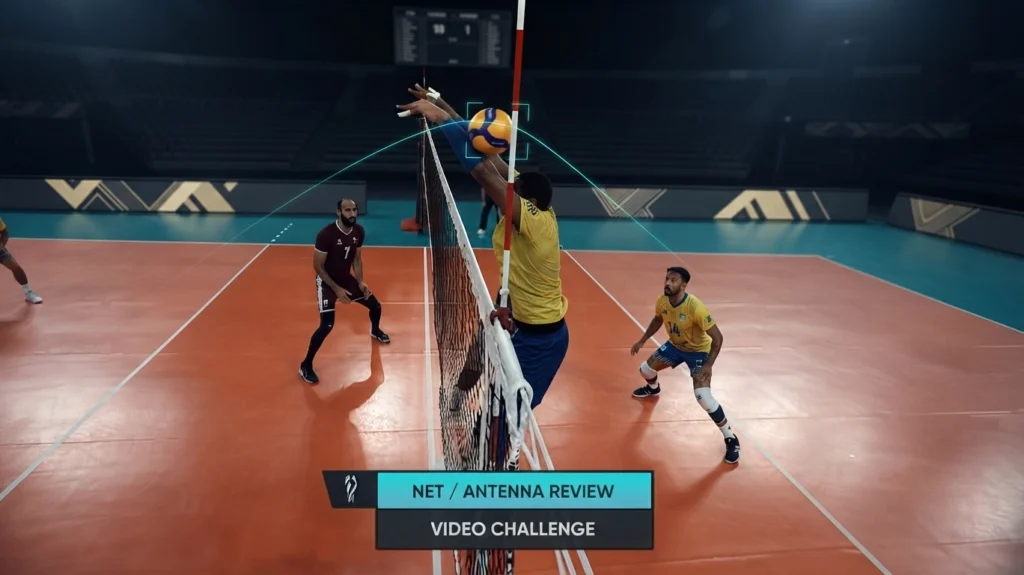
A multi angle replay system volleyball setup helps referees examine the moment from different viewpoints, reducing the chance of an incorrect decision.
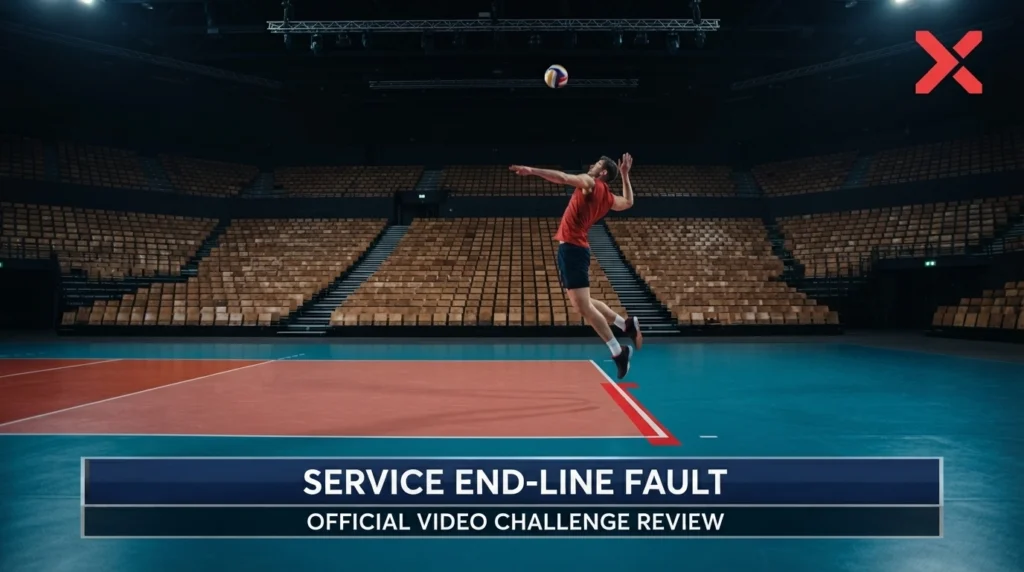
Service Foot Faults
Service faults can be hard to detect when the server moves quickly or when the referee’s view is partially blocked. Camera coverage near the service zone can help review whether a player stepped on or over the line during service.
Ball Crossing and Net Plane Decisions
Some disputes involve whether the ball crossed the net correctly or whether contact occurred on one side of the net. Camera views focused around the net can help officials review the action more clearly.
Why Use Industrial Cameras for Professional Sports Refereeing
Not all cameras are suitable for professional sports review. Consumer‑grade devices may handle basic recording, but elite officiating demands reliability, clarity, and strict consistency under pressure.
Industrial cameras are built for demanding visual inspection environments. In sports, this translates into stable image quality, precise timing, and robust connectivity — exactly what referees need when every frame can decide a match. If the footage is blurred, delayed, poorly synchronized, or captured from the wrong angle, the entire challenge process becomes less effective. With Basler‑based vision hardware, Vertix Robotics can design an integrated Dubai sports solution that meets professional review requirements in indoor volleyball venues.
Better Image Consistency
Industrial sensors deliver stable exposure, color, and sharpness across matches and tournaments. Referees see the same visual quality every time, reducing ambiguity in critical reviews.
Higher Frame Rate Options
High‑speed frame rates capture micro‑moments in serves, spikes, and blocks. Slow‑motion playback reveals exactly when contact, crossing, or touch occurs.
More Reliable Connectivity
Robust interfaces such as GigE Vision or USB3 Vision provide stable links between cameras and review systems, minimizing dropped frames and signal loss during live play.
Improved Synchronization
Hardware triggers and time‑stamped frames make it possible to synchronize multiple angles precisely, aligning ball, net, and line views for accurate decision‑making.
Machine Vision Integration
Industrial cameras are natively compatible with machine vision libraries, enabling automated line detection, ball tracking, and event tagging on top of live video feeds.
Rugged Fixed Installations
Designed for 24/7 operation, these cameras withstand vibration, temperature changes, and long duty cycles — perfect for permanent mounting in sports arenas.
Controlled Image Capture
Precise control over shutter, gain, and exposure lets operators tailor image capture to indoor volleyball lighting so every challenge frame is clean and usable as visual evidence.
A Practical Volleyball Hawk Eye Alternative
Vertix Robotics offers a practical volleyball Hawk-Eye alternative for clubs, leagues, academies, and tournament organizers that need accurate video review without the complexity and cost of premium broadcast systems. Our solution combines industrial Basler cameras, synchronized multi-angle recording, and AI-assisted analysis to capture fast plays with clarity. From tight line calls and net contacts to block touches and antenna decisions, officials can review the key moment frame by frame and make confident, transparent decisions.
Unlike traditional systems that depend on expensive infrastructure, our approach is designed to be scalable, flexible, and easy to deploy in real volleyball venues. It supports referee challenge workflows, improves officiating consistency, and reduces pressure during high-stakes matches. By giving officials clear visual evidence, it helps preserve the flow of the game while increasing trust among players, coaches, and fans.
Whether you are upgrading a single court or outfitting an entire competition venue, Vertix Robotics delivers a smart, reliable, and cost-effective volleyball review system built for modern officiating. It is an ideal choice for organizations seeking professional-grade review capabilities with faster setup and lower operational overhead overall.


Volleyball VAR System for Modern Sports Venues
VAR has changed expectations in many sports. Fans, athletes, and coaches increasingly expect important decisions to be reviewed with technology. Volleyball is no exception.
A volleyball VAR system brings structured video review into the match environment. It helps transform controversial calls into transparent decisions supported by evidence.
However, volleyball has its own rhythm and requirements. A volleyball review system must be fast, because long interruptions can affect match flow. It must be accurate, because decisions can change the outcome of a set. It must be easy to use, because referees should not struggle with complicated software during pressure moments.
Vertix Robotics designs its volleyball video review workflow around these needs.
A Practical Volleyball Hawk Eye Alternative
Dubai is rapidly becoming a global center for smart infrastructure, advanced technology, sports events, and innovation. From AI-driven services to high-tech venues, the city continues to invest in intelligent systems that improve performance, experience, and operational quality.
Vertix Robotics is positioned to support this evolution with smart sports officiating Dubai solutions. Our volleyball video challenge Dubai system is designed for local clubs, schools, academies, sports halls, event organizers, and professional leagues that want to upgrade their officiating technology.
As interest in AI sports technology Dubai grows, volleyball venues can benefit from adopting intelligent systems that improve fairness, reduce disputes, and enhance the spectator experience.
For organizations looking for a vertix robotics volleyball system, our team can help plan a video challenge setup based on the venue layout, court dimensions, competition level, and review requirements.

Precision Vision for Every Point, Decision, and Victory Basler Technology
Best Camera Setup for Volleyball Replay
What is the best camera setup for volleyball replay? The right configuration depends on the competition level, available budget, court layout, venue lighting, and the types of challenge decisions officials need to review.
An effective system is not simply built by adding more cameras. Professional replay depends on placing the right cameras in the right positions, synchronizing every angle, connecting the hardware to reliable review software, and creating a fast workflow that helps referees reach evidence-based decisions.

End Line Cameras
End line cameras cover the rear boundaries of the volleyball court and support accurate back-line calls, service-related reviews, and service foot-fault decisions.
- Back-court in/out decisions
- Service foot-fault review
- Ball contact with the end line
Side Line Cameras
Side line cameras provide a clear view along the length of the court. Their angle is crucial when officials must decide whether a fast-moving ball touched or crossed the side boundary.
- Longitudinal coverage of the court
- Side-line in/out decisions
- High-speed ball landings near the side line
Net Area Cameras
Net-focused cameras capture the most visually complex area of the game. They help officials evaluate touches, net faults, antenna contacts, and ball crossing or net-plane situations.
- Blocker and defender touches
- Net and antenna contact review
- Ball crossing and net-plane decisions
Elevated Wide-Angle Cameras
Elevated wide-angle cameras provide a full view of each rally. While they do not replace dedicated line or net cameras, they offer essential context for reconstructing the sequence of play.
- Full-court situational awareness
- Complete=" reconstruction
- Context around detailed camera angles
Synchronized Multi-Camera Views
For serious officiating, all cameras must operate as one synchronized replay system. When frames are aligned in time, officials can compare the same moment from several angles without timing inconsistencies.
- Frame-aligned multi-angle review
- Faster comparison between camera views
- More reliable visual evidence for challenge decisions
A Complete Replay Workflow
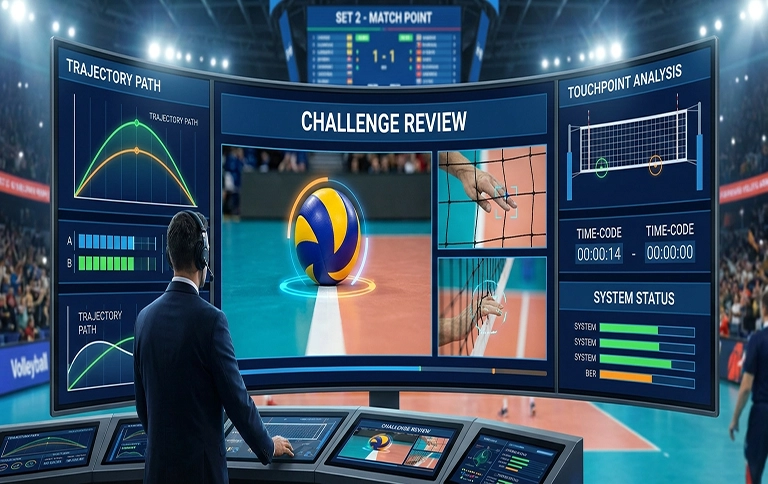
A professional multi-angle replay system for volleyball combines strategic camera placement, synchronized capture, dependable connectivity, purpose-built review software, and an intuitive referee workflow. The goal is not to collect more footage—it is to deliver the right visual evidence exactly when it is needed.
Precision Volleyball Refereeing: Human Authority, Enhanced Evidence
Advanced technology is transforming sports officiating, but its true power lies in supporting, not replacing, the referee. The primary goal of a professional video challenge system is to provide human officials with the high-fidelity evidence required to make the most accurate decisions possible.
A robust volleyball video challenge system empowers referees by:
- Synchronized Multi-Angle Capture: Providing comprehensive visual coverage from multiple vantage points simultaneously.
- High-Speed Frame Analysis: Slowing down intense rallies to examine key actions with absolute clarity.
- Precision Ball Tracking: Pinpointing exact landing zones with high-resolution visual confirmation.
- Contact Identification: Detecting subtle touches and net infractions that occur in fractions of a second.
- Streamlined Review Workflow: Organizing footage instantly to minimize downtime and maintain game flow.
- Objective Visual Proof: Delivering clear, structural evidence to support split-second judgments.
This professional-grade video challenge technology is critical during fast-paced rallies where key incidents last only a few frames.
For instance, during an in/out ball challenge, the system provides a clear view of the exact landing moment, ensuring the call is based on visual reality. During a touch challenge, officials can isolate the specific moment of impact, viewing frame-by-frame details to confirm subtle deflections.
The referee maintains full authority to make the final call, but the decision is backed by structured, reliable, and high-definition evidence—ensuring fairness and integrity throughout the match.

Benefits for Clubs, Leagues, and Event Organizers
A professional volleyball video challenge system creates value far beyond reviewing a single disputed call.
By combining reliable match recording with real-time video review, the system improves officiating quality, supports athlete development, and increases the professional value of competitions. Clubs, leagues, sports venues, event organizers, and referees can all benefit from faster access to clearer and more structured visual evidence.
For Volleyball Clubs
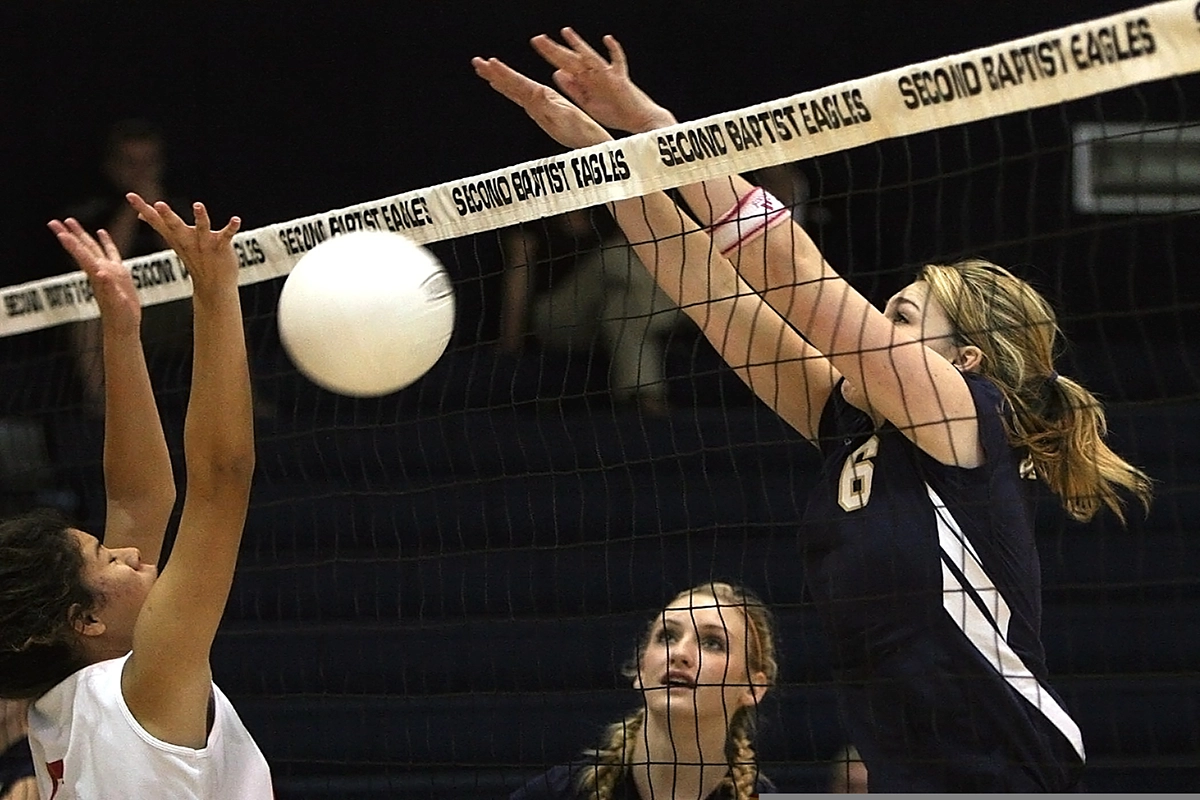
A video challenge system improves the professionalism of matches and training events. Clubs can also use recorded footage for coaching, performance review, and athlete development.

For Leagues
Leagues can create a more consistent officiating standard across matches. This improves credibility, reduces controversy, and helps ensure that every competition follows the same review process.
For Sports Venues
Venues equipped with smart officiating systems become more attractive for tournaments, finals, international events, and premium competitions requiring professional review infrastructure.

For Event Organizers
A real-time video review volleyball system helps create a more professional event experience. It also supports broadcast integration, audience engagement, and sponsor value.
For Referees
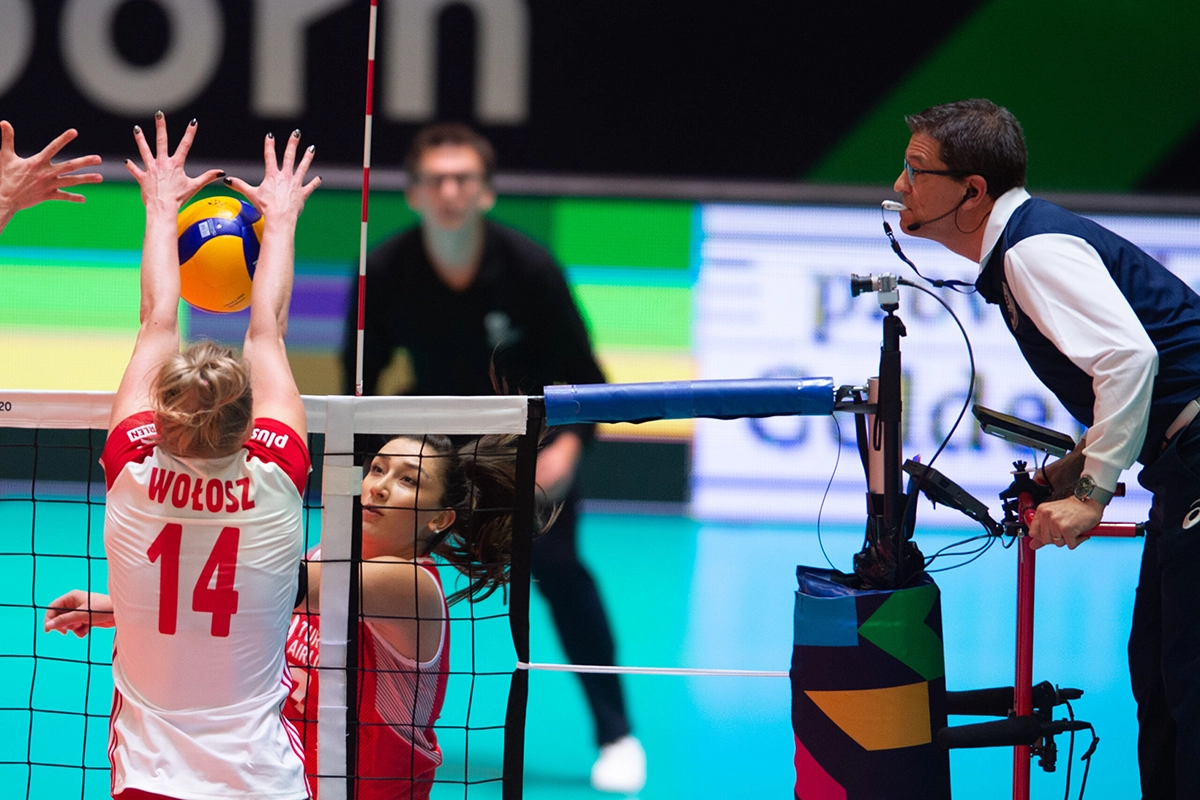
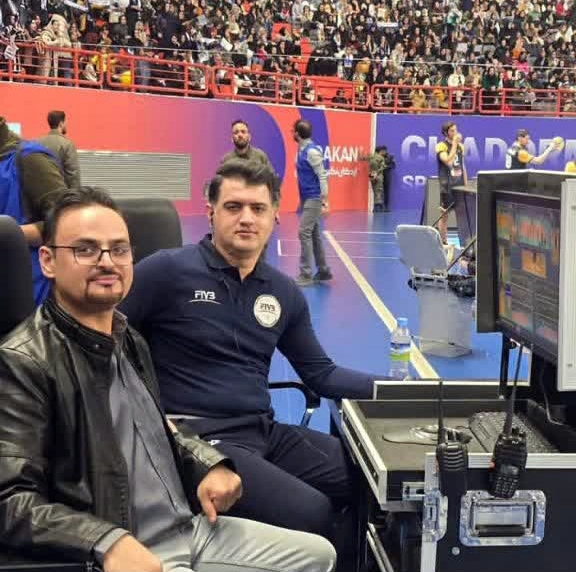
The system reduces pressure and provides better tools for difficult decisions. Instead of depending only on instant perception, officials can review the moment carefully.

Volleyball Video Challenge Technology Cost
Organizations often inquire about the investment required for a professional volleyball video challenge system. The total project cost is determined by specific operational and technical requirements. Key factors include:
- Venue Scope: Total number of courts to be outfitted.
- Camera Configuration: Total camera count, sensor resolution, and frame rate specifications.
- System Architecture: Replay software complexity, processing power, and workflow features.
- Installation Scope: Rigging requirements, cabling, and physical mounting constraints.
- Infrastructure: Networking bandwidth, server-side storage capacity, and data redundancy.
- Display & Interface: Referee review station hardware and courtside monitor requirements.
- System Interoperability: Integration with existing scoreboard systems, live broadcast feeds, and video control rooms.
- Long-term Maintenance: Level of ongoing support, technical training, and system upgrades.
Vertix Robotics designs modular solutions tailored to your specific operational needs and financial constraints. We support a range of configurations—from streamlined, single-court setups for local academies to robust, multi-camera, broadcast-integrated systems for professional leagues.
The most effective planning strategy begins by identifying the core officiating challenges you aim to resolve. If line calls are the primary concern, our design prioritizes court-boundary camera placement. If net-play and block-touch disputes are frequent, we focus engineering efforts on high-speed net-area coverage.
This pragmatic, requirements-first approach ensures that your investment provides tangible, match-critical results, directly supporting the integrity of your competition.
Why Choose Vertix Robotics for Volleyball Video Challenge Dubai
Vertix Robotics combines robotics, machine vision, industrial cameras, and system integration to deliver professional video challenge solutions for modern indoor volleyball venues.
With Vertix Robotics, you are not just buying cameras. You are building a complete officiating workflow—from camera selection and placement to replay software integration, review interface design, and long-term match analysis capabilities.
Why Choose Vertix Robotics?
Vertix Robotics brings together experience in robotics, machine vision, industrial imaging, and system integration to deliver reliable, court-ready sports technology for modern venues.
Our volleyball video challenge solution is designed for organizations that need professional video review, industrial camera reliability, scalable architecture, Dubai-based technology support, practical deployment planning, custom court-based configuration, and greater transparency in officiating.
Volleyball Video Challenge Dubai
Dubai’s sports ecosystem is growing quickly, and the demand for professional, technology-supported competitions is increasing. A volleyball video challenge Dubai solution gives venues and organizers a clear competitive advantage.
By implementing advanced video challenge technology, you can improve match fairness, reduce disputes, increase event credibility, support professional-level tournaments, enhance fan experience, build trust with teams and coaches, modernize venue infrastructure, and align with Dubai’s innovation-driven sports vision.
From Simple Replay to Structured Insight
Basic replay systems only show video. Professional video challenge systems help officials understand exactly what happened. That is the difference between standard recording and volleyball video review technology built around machine vision and synchronized multi-camera replay.
A well-designed system can support faster review navigation, relevant frame selection, multi-camera synchronization, visual evidence organization, referee workflow control, match archive creation, and training and analysis use cases. This creates value beyond officiating and enables deeper sports intelligence for coaches, clubs, and federations.
Our Video Challenge System Packages
Camera configurations, processing hardware, software licensing, and professional operator training—combined in one scalable volleyball video review solution. Final pricing and component selection are tailored to each venue and competition level.
Built for High-Speed Volleyball Decisions
The system uses strategically positioned Basler industrial cameras to capture line calls, block touches, floor touches, net incidents, attack-line events, and the main court view. Different camera configurations are available based on competition requirements and court coverage, and are defined during the system design phase.
Basler Camera Specifications
| Camera Position | Camera Type | Resolution Class |
|---|---|---|
| Line | Basler Camera | High-Resolution |
| Block Touch & Floor Touch | Basler Camera | High-Resolution |
| Net | Basler Camera | High-Resolution |
| Attack Line | Basler Camera | High-Resolution |
| Main Court View | Basler Camera | High-Resolution |
Minimum Computer Specifications
Systems with 13 & 15 Cameras
- CPU Intel Core i7-7700K (or equivalent)
- Motherboard ASUS PRIME Z270-A (or compatible)
- System Disk 512GB M.2 SSD
- Storage Disk 1TB SSD
- Memory 64GB DDR4 RAM
- LAN Cards 2 × 4-Port Gigabit
- Display 24-inch Full HD LED
- Accessories Keyboard & Mouse
Systems with 17 & 19 Cameras
- CPU Intel Core i9-9900K (or equivalent)
- Motherboard ASUS PRIME X299 DELUXE*
- System Disk 1TB M.2 SSD
- Storage Disk 2TB SSD
- Memory Up to 128GB RAM*
- LAN Cards 3 × Dual-Port 2.5GbE
- Display 24-inch Full HD LED
- Accessories Keyboard & Mouse
* Final motherboard and memory compatibility must be technically verified before procurement. Exact component brands and models can be adjusted to local availability and buyer preferences.
Additional Hardware
PoE Network Switches
High-performance PoE network switches for camera connectivity. The exact number of switches and ports is defined based on camera count and court layout.
Video Conversion
HDMI-to-SDI converter adapters (e.g., DataVideo DAC-70) or equivalent devices for integration with existing AV systems.
Industrial Cabling
Cat6 S/FTP Ethernet cables in multiple lengths (10m, 20m, 30m, and 50m) or adjusted to the exact court and venue topology.
Flexible Procurement
Computers and supporting hardware can be purchased locally or supplied as part of the complete system. Final component lists and costs are agreed in the commercial proposal.
Available System Configurations
17-Camera Configuration
- Line Cameras Dedicated coverage for key line decisions
- Block-Touch Cameras Focused views for block and floor touches
- Net Cameras Close-up monitoring of net incidents
- Main Camera Central view for overall rally context
19-Camera Configuration
- Line, Attack Line & Floor Touch Enhanced multi-angle coverage for complex line and landing decisions
- Block-Touch Cameras Additional angles for block touch verification
- Net Cameras Detailed monitoring of net and antenna events
- Main Camera High-level match view for decision context and archiving
Software License Options
Initial software license for one Video Check system, covering installation, configuration, and first-year operation. Exact license fees are provided in the commercial offer.
Annual software renewal per Video Check system, independent of camera count. Renewal terms and pricing are defined based on competition calendar and long-term usage.
One-time license option for long-term system operation, suitable for federations and venues planning continuous use across multiple seasons. Lifetime license pricing is available on request.
Volume conditions and discounts for multiple software licenses can be discussed during the proposal stage. Please contact us to receive a tailored licensing and pricing model for your organization.
Professional Operator Training
Two specialized Video Challenge instructors can visit the buyer’s location for a three-day training program. Before their arrival, the buyer assembles the system with remote assistance from the technical team, ensuring that on-site time is used to refine and optimize the workflow.
The training program includes:
- Complete Video Check system setup
- Camera positioning and optical adjustment
- Software operation and review workflow
- System diagnostics and troubleshooting
- Installer-level training and Q&A sessions
Technical specifications on this page are provided for preliminary system design and commercial presentation. Exact components, brands, and prices are confirmed during the final quotation process. Shipping, customs, taxes, installation expenses, and locally purchased computer hardware are calculated separately. For up-to-date pricing and detailed parts lists, please contact us directly.

Playlist
0:16
0:16
0:16
Volleyball Video Challenge System FAQs
Learn how industrial cameras, high-speed replay, machine vision, and AI-assisted analysis support faster, clearer, and more reliable volleyball officiating.
What is a volleyball video challenge system?
A volleyball video challenge system is a multi-camera review platform that allows match officials to examine disputed plays using synchronized, high-speed video. It can support reviews involving in-or-out line calls, player touches, net contacts, antenna contacts, service foot faults, and other incidents permitted by competition rules.
How does a volleyball video challenge work?
When an eligible challenge is requested, the review official accesses synchronized footage captured by cameras positioned around the court. The incident can be replayed from multiple angles, slowed down, paused, or examined frame by frame. AI may help identify relevant moments, but the authorized match official makes the final decision.
Which referee decisions can the system help review?
Depending on the competition rules and camera configuration, the system can help review in-or-out decisions, block and defender touches, net contacts, antenna contacts, service foot faults, and selected ball-crossing situations. The available challenge categories depend on the rules adopted by the relevant federation, league, or tournament.
How does AI improve volleyball video review?
AI-assisted analysis can help detect the ball, track its movement, identify probable landing or contact moments, and direct the review official to relevant video frames. This can reduce manual search time and improve review consistency. AI supports the referee and does not replace human authority over the final decision.
Why use Basler industrial cameras for volleyball replay?
Basler industrial cameras are suitable for machine vision workflows requiring reliable image acquisition, controlled exposure, flexible integration, and high-speed capture options. In volleyball replay applications, these capabilities can help reduce motion blur and provide clearer visual evidence for line calls, touches, net contacts, and antenna incidents.
Can the system review in-out and touch challenges?
The system can provide high-speed, multi-angle visual evidence for in out challenge volleyball and touch challenge volleyball reviews. Review quality depends on camera placement, frame rate, shutter settings, court lighting, lens selection, camera synchronization, and whether the incident is clearly visible from one or more angles. The referee retains authority over the final decision.
What is the best camera setup for volleyball replay?
The best setup is designed around the court layout, venue conditions, challenge rules, lighting, and competition level. A professional configuration may include cameras covering the side lines, end lines, service zones, net and antenna areas, together with an elevated contextual view. Correct positioning and synchronization are generally more important than simply installing more cameras.
Does the Vertix Robotics system replace volleyball referees?
No. The Vertix Robotics volleyball video challenge system is designed to support referees by presenting synchronized visual evidence from relevant camera angles. AI and machine vision can accelerate the review workflow, but authorized match officials remain responsible for interpreting the evidence and making the final decision.
How much does volleyball video challenge technology cost?
The cost depends on the number of courts and cameras, required frame rate and resolution, lenses, network infrastructure, processing hardware, storage capacity, replay software, AI capabilities, installation conditions, and integrations with venue or broadcast systems. Vertix Robotics can define a court-specific configuration after assessing the venue and officiating requirements.
Is the Vertix Robotics volleyball video challenge system available in Dubai?
Vertix Robotics provides volleyball video challenge and smart sports officiating solutions for venues, clubs, academies, leagues, and event organizers in Dubai and can design systems for international projects. Deployment planning can include camera placement, networking, processing, storage, replay workflow, installation, and operational requirements.